
Felony Theft Devastates 84-Year-Old Florida Beekeeper: Neighbor Joseph Denick Claims “Mistake” Lead to 2 Million Stolen Honeybees

In a heart-wrenching tale of betrayal and resilience, 84-year-old Richard Marquette, a lifelong beekeeper from Citrus County, Florida, watched his dreams—and his livelihood—buzz away in late July when 20 of his beehives vanished from his property. What started as a neighborly property dispute escalated into what authorities and Marquette’s attorney are calling a clear case of felony theft, with an estimated loss of up to $16,000 in honey harvests alone. But thanks to a viral media storm and the kindness of strangers, 14 of those precious hives have been returned, offering a glimmer of hope to the elder statesman of the apiary world.

A Lifetime of Buzz Cut Short
Richard Marquette isn’t just any retiree—he’s a beekeeping veteran with over seven decades of experience, tending hives since he was a boy of 10. At 84, the soft-spoken Floridian supplements his income from a part-time Walmart gig (currently on medical leave due to an injury) by selling his golden honey at $20 a quart. Each of his hives can yield 20 to 40 quarts per season—translating to $400 to $800 in revenue per hive annually. With 20 hives housing roughly two million bees, Marquette’s operation wasn’t just a hobby; it was his lifeline, pollinating local crops and funding his golden years, with the total harvest value estimated at $8,000 to $16,000.
That all changed one sweltering July day. Returning to his vacant lot, Marquette discovered the hives gone. In their place? Fresh tracks from a backhoe that had bulldozed trees nearly 50 feet inside his property line. The destruction was methodical: contractors hired by his new neighbor, Joseph Denick, had crossed the boundary while clearing Denick’s adjacent lot for development. But the hives? They weren’t accidentally felled—they were deliberately loaded up and hauled away on Denick’s orders.

Denick, who had recently purchased the neighboring parcel, admitted to investigators that he instructed a friend to “move” the hives after the crew pointed them out, claiming a mix-up over property lines. He later posted on Facebook offering the hives for free pickup, and according to him, a “friend of a friend” scooped them up—refusing to name names. The Citrus County Sheriff’s Office traced the hives to two undisclosed locations in Pinellas County but closed the case after 90 days, deeming it a “civil matter” despite the felony-level value of the theft.
Marquette’s attorney, Andy Lyons, fired off a demand letter to Denick, arguing the loss extends far beyond the physical hives: “This isn’t just about bees—it’s about destroying a man’s ability to earn a living for a year or more, including the queens, the ecosystem, and future harvests.” Experts peg the annual value of a single hive at $200 to $500 in net revenue, but for Marquette, the real sting was irreplaceable: the pollination power of two million bees, vital to one-third of U.S. food crops already under threat from mites, diseases, and pesticides.

From Despair to Viral Uproar
Word of the theft spread like wildfire in local beekeeping circles, but it was an investigative report by Tampa Bay’s I-Team that ignited a global blaze. Airing in early November, the segment amassed over two million views across TV, Instagram, TikTok, and YouTube, drawing thousands of comments, prayers, and offers of help. Social media erupted with outrage: One X (formerly Twitter) user blasted Denick as a liar who “bought a lot without knowing where the property line was,” while community Facebook groups warned neighbors to “hide your bees from Joseph Denick.”
The backlash hit Denick hard. Facing online threats and negative comments, he texted an apology to Marquette: “From the bottom of my heart, I’m sorry to you and your family. I performed poorly in front of the cameras.” He insisted it was an “honest mistake” and claimed he was working discreetly with beekeepers to retrieve the hives. Marquette, ever the gentleman, had even offered an in-person sit-down to resolve things amicably—Denick skipped it, later calling to dismiss it as “no big deal.”
But the viral wave did what law enforcement wouldn’t: It forced action. Lyons launched a GoFundMe to rebuild Marquette’s apiary, pulling in donations from sympathetic beekeepers nationwide. Then, last weekend, a Pinellas County beekeeper tipped off the I-Team: The hives were located.

A Sweet Reunion, But Questions Linger
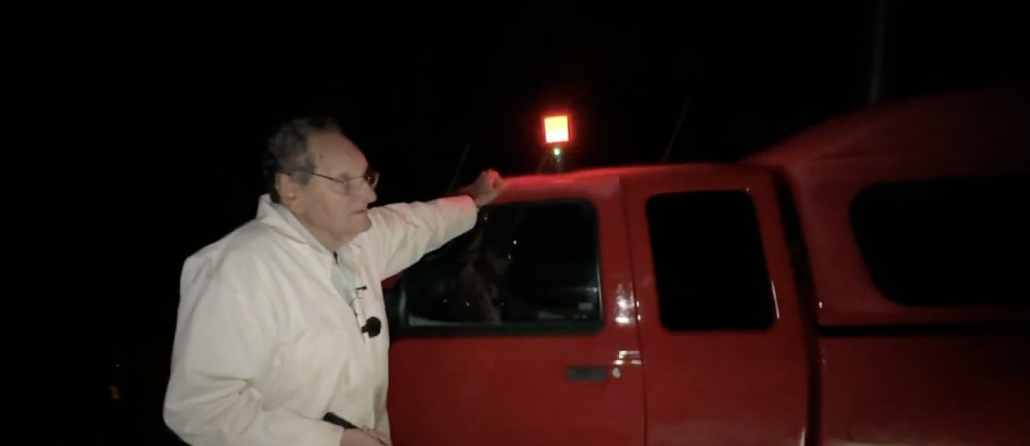
Enter the heroes of the hour: Volunteers from St. Petersburg’s Noble Nectar Apiaries, led by owner Allison Davis, who had emailed Lyons post-broadcast offering equipment and bees. Acting as an anonymous intermediary (at the request of someone tied to Denick), the team spent eight grueling hours retrieving the 2,000-pound cargo from its hiding spots. Under the cover of a dark country road, suited up in white protective gear, they unloaded 14 of the 20 hives onto Marquette’s property.
Marquette’s reaction? Pure elation. “It’s like Christmas morning for a kid!” he beamed, hugging the volunteers and sharing homemade cookies baked by his wife of 63 years. A Florida bee inspector is en route to assess the returned hives for damage from mites or disease, but Marquette sees divine intervention at work: “This is a random miracle.”
Beekeeper Reunion Volunteers from Noble Nectar Apiaries unload the returned beehives under the Florida night sky. (Courtesy: Tampa Bay I-Team)
Yet, the story isn’t fully stung. Six hives remain missing, along with revenues from the lost summer harvest. Marquette and Lyons are now looping in a Citrus County detective for felony theft charges against Denick, who could face restitution for the environmental fallout too—those bulldozed trees and displaced bees disrupted local pollination efforts.

Lessons from the Hive: Community Over Conflict
Marquette’s ordeal underscores a harsh reality in America’s side-hustle economy, where 41% of consumers juggle extra gigs to make ends meet. For seniors like him, fixed incomes and health setbacks make such ventures essential. It also highlights the vulnerability of pollinators: Losing two million bees isn’t just a personal tragedy—it’s an ecological alarm bell.
As Marquette rebuilds, the beekeeping community rallies. “Guilt will eat at those who kept the hives longer than they should have,” he muses, hoping for full restitution. Denick’s lawyer has gone silent, but the message is clear: In an age of viral justice, neighbors beware—stealing from the hive invites a swarm.
Support Richard Marquette’s recovery via his GoFundMe here. Have a story of community comeback? Share in the comments below.
Sources: AOL Finance, Tampa Bay I-Team Investigates, X (Twitter) community posts.



Leave a Reply
Want to join the discussion?Feel free to contribute!