
IOWA | Army Detonates About 5 Tons of Unstable Lead Azide; EPA Reports No Airborne Lead at First Check
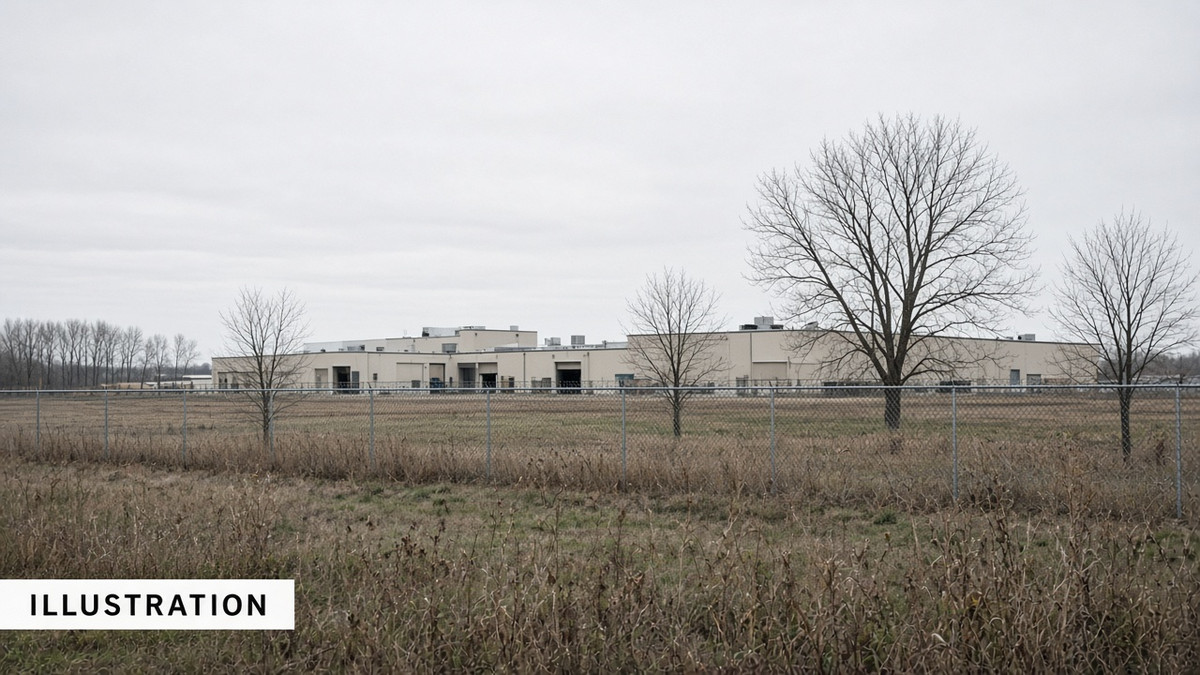
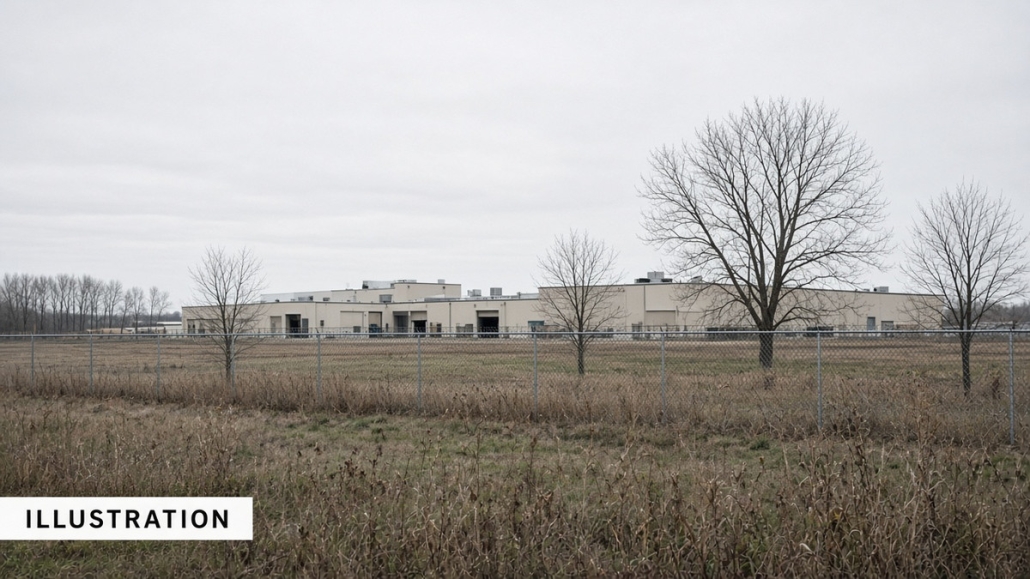
Illustration: A rural industrial landscape. The Fostoria Free Press. This is not a photograph of Wednesday’s detonation.
MIDDLETOWN, Iowa — The U.S. Army on Wednesday, Nov. 25, carried out a controlled detonation of roughly five tons of unstable lead azide at the Iowa Army Ammunition Plant, Army officials said, after warning that the degraded explosive had become too dangerous to move or treat another way.
NPR, citing the Army, said the blast destroyed more than 60 barrels of the material, an explosive the military has used since World War I to ignite munitions. About two hours later, Maj. Gen. Eric Shirley said overhead coverage showed the barrels were “definitively removed,” with no secondary explosions, no “kickout” and no infrastructure damage on or around the installation. “I believe, absolutely, that we reduced, as close to zero as is absolutely humanly possible, the risk to the health and safety of the people of Middletown and the extended communities throughout Iowa,” Shirley said.
The U.S. Environmental Protection Agency said that one hour after the detonation, all of its real-time air monitors in the region were reporting zero detection of airborne lead, and that the monitors had collected data throughout the event. Administrator Lee Zeldin said the agency had collected 1,200 samples of air, land, dust and water before the blast and that about 300 employees and contractors would continue sampling air, land and water in the hours and days ahead, with remediation if needed. The EPA said members of the public seeking information can call 1-833-649-9624.
Iowa Gov. Kim Reynolds issued a statement commending the Army and saying initial information from federal partners and state agencies was that mitigation strategies had exceeded expectations. She said the EPA had confirmed no detection of airborne lead in the region at that point, called that a best-case scenario for Middletown and nearby communities, and said state agencies would keep monitoring air, soil and water quality.
Officials had said the lead azide, stored for decades at the plant and moved to a bunker there 17 years ago, had formed crystals that made it highly sensitive to movement and temperature changes. A chemical treatment was ruled out, and officials said it was too dangerous even to open the containers. The date of the blast shifted more than once after lawsuits by environmental groups. A federal appeals court cleared the way on Monday, NPR reported.
Some residents had voluntarily evacuated. FEMA had told people within 20 miles southwest of the plant to stay indoors with windows closed to limit exposure to dust, noise and vibration, NPR reported. Monitoring and possible cleanup work are expected to continue. A first reading of no airborne lead is not the same as a finished environmental review.
Sources: U.S. Environmental Protection Agency, Nov. 25, 2026; Iowa Gov. Kim Reynolds, Nov. 25, 2026; NPR; The Associated Press.



Leave a Reply
Want to join the discussion?Feel free to contribute!