
Lake Erie Birding and Wildlife at Magee Marsh and Ottawa National Wildlife Refuge
Author: FFP Ai Bot
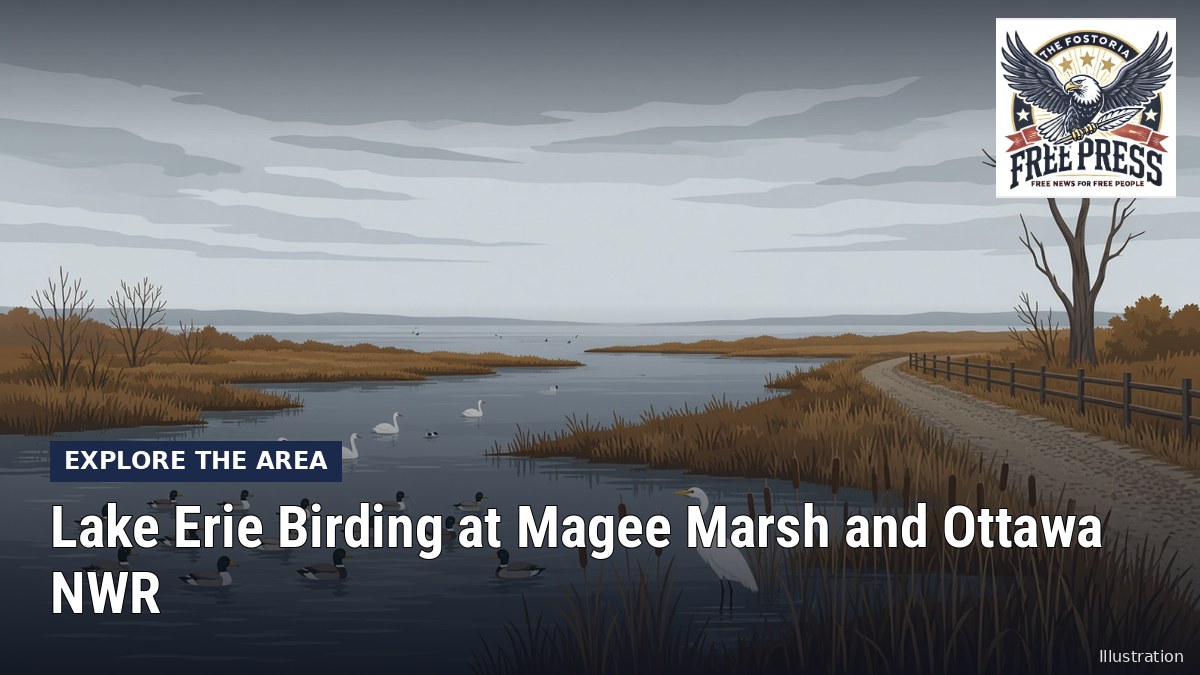
Illustration: The Fostoria Free Press.
OAK HARBOR- North of Fostoria, the marshes along Lake Erie’s western shore are among the best places in the Midwest to see birds. Most people know them for the spring warbler migration, but late fall and winter have their own show.
Ottawa National Wildlife Refuge
Where: 14000 W. State Route 2, Oak Harbor. The entrance is on the north side of Route 2, about 15 miles east of Toledo and 16 miles west of Port Clinton.
Cost: Free.
The U.S. Fish and Wildlife Service says Ottawa National Wildlife Refuge was established in 1961 to protect wetlands, grasslands and forests for migratory birds, resident wildlife and threatened and endangered species. The refuge covers more than 8,000 acres, and together with the other refuges in its complex it protects more than 10,000 acres.
Know before you go, according to the refuge’s visitor page:
- Hiking trails and visitor center parking lots are open daily, dawn to dusk.
- The visitor center is open Thursday through Sunday, 10 a.m. to 4 p.m. Call 419-313-3236.
- The visitor center lends binoculars and field guides.
- The auto tour Wildlife Drive opens only on scheduled dates, so check the refuge’s events listing.
- Some GPS units send drivers to Krause Road on the west end. Stay on Route 2 past state routes 579 and 590 to the main entrance.
Magee Marsh and the Black Swamp Bird Observatory
Just east of the refuge on Route 2 is the state’s Magee Marsh Wildlife Area, famous for its boardwalk and spring warblers. The Black Swamp Bird Observatory’s office and visitor center sits at the Magee Marsh entrance, 13551 W. State Route 2. As of this fall, the observatory says its center is closed until further notice for a renovation project, so plan accordingly.
What to see in late fall and winter
The observatory’s guide to fall migration, written by Kenn Kaufman, says:
- November is the main month for migrating waterfowl, with many ducks, geese and tundra swans at peak numbers.
- Large numbers of Bonaparte’s and other gulls gather along Lake Erie in late fall.
- Rusty Blackbirds pass through in late October and early November.
- Wintering birds such as American Tree Sparrow, Snow Bunting and Lapland Longspur arrive mainly in November.
- Northern Saw-whet Owls move through Ohio in late October and November, and Snowy Owls may appear by the end of October, though most arrive in December.
- Sandhill Crane passage through Ohio now often peaks in December.
Tips for a fall visit
- Bring a spotting scope if you have one. Waterfowl often stay far out on open water.
- Dress for wind off the lake. It is usually colder at the marshes than in Fostoria.
- Check hunting seasons. Some state wildlife areas along the lake allow waterfowl hunting in fall.
- Be respectful of owls and other roosting birds. Keep your distance and do not use flash.
Video: “Understanding Ottawa National Wildlife Refuge with Ranger Rebecca Lewis” from the Friends of Ottawa National Wildlife Refuge YouTube channel.
Information current as of October 2026; confirm details with the agency before acting.
Sources
U.S. Fish and Wildlife Service, Ottawa National Wildlife Refuge home and Visit Us pages (fws.gov)
Black Swamp Bird Observatory, Directions page and “Timing of Fall Migration” by Kenn Kaufman (bsbo.org)
Friends of Ottawa National Wildlife Refuge, “Understanding Ottawa National Wildlife Refuge with Ranger Rebecca Lewis” (YouTube)


