

2026 Silver Bull Run – How High Can Silver Realistically Rise?
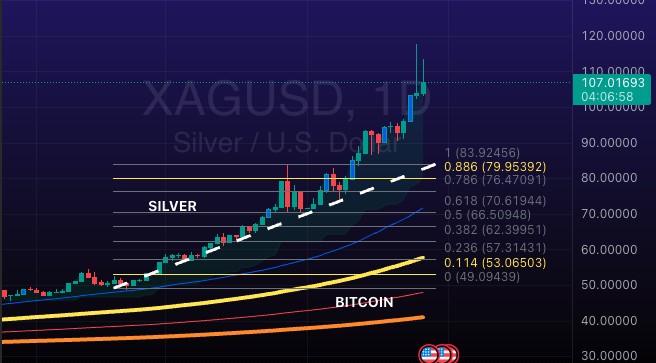
*Not financial advice. This is an Ai overview:
Silver has already entered a sharp bull phase in 2025–26, but most credible outlooks still frame upside in terms of high double‑digits to low‑triple‑digits per ounce rather than the most extreme four‑figure targets.
Where Silver Is Now (Early 2026)
Silver has broken to record territory, trading in the low‑$100s per ounce after a roughly 150–200% surge over the past 12–13 months. Recent reports cite spot prices around 110–120 dollars, with one outlet noting a move through 117 dollars on January 27, 2026 amid strong yearly gains. This rally follows a historic run in 2025, when silver first pushed through 80–90 dollars and then accelerated as supply deficits and speculative interest intensified.
Key Drivers of the 2026 Bull Run
Analysts highlight a cluster of structural and macro drivers rather than just short‑term speculation. The most cited forces are:
-
Persistent supply deficits: Silver has run multiple years of mine‑supply shortfalls, drawing down above‑ground inventories and tightening the physical market.
-
Industrial demand: Solar, electric vehicles, electronics and AI‑related hardware are materially increasing silver’s industrial usage, making it both a monetary and high‑tech metal.
-
Monetary backdrop: Global rate‑cut cycles, weaker real yields and a softer dollar reduce the opportunity cost of holding bullion and tend to support precious‑metal prices.
-
Geopolitics and de‑dollarization: Geopolitical tensions and central‑bank diversification out of dollars into bullion add a “risk and currency” premium to both gold and silver.
Together, these conditions help explain why silver has overshot many earlier forecasts that expected it to remain below 100 dollars in 2026.
What Analysts See as “Realistic” Upside
Mainstream houses and precious‑metal specialists now generally cluster their 2026–27 silver expectations between about 90 and 170 dollars, with upside tails above that. Examples:
| Source / View | Stated or Implied Range | Context |
|---|---|---|
| UK‑based bullion firm outlook | 90–120 dollars as a core 2026 band, with upside cases to 150–170 dollars if deficits and retail demand persist. | Sees current prices as elevated but fundamentally supported. |
| Industry commentary (Metals Focus, others) | Averages in the 50–60 dollar area in earlier drafts for 2026, but now acknowledge risk of moves “well north of 100” as price action has broken records. | Earlier, more conservative forecasts that have been overtaken by events. |
| GoldSilver.com analyst | Expects silver to trade “above 100” in 2026 after a 147% gain in 2025, with tight supply and strong industrial momentum. | Emphasizes consolidation punctuated by upside spikes. |
| Large bank “bull case” | Bank of America has referenced a possible 170‑dollar scenario within roughly two years, noting that recent gains have overshot prior expectations. | Treated as an upper‑bound bull case, not a base case. |
More aggressive voices go further: some commentators and high‑profile investors have floated 100–200 dollars per ounce by early 2026 or shortly thereafter, and certain long‑term technical models talk about very long‑range targets in the 300–400‑dollar zone. These numbers, however, sit at the speculative end of the spectrum and depend on extended deficits, continuing monetary debasement, and sustained investor mania.
Why Four‑Figure Targets Look Less Probable (For Now)
Algorithmic and retail‑driven forecast sites occasionally publish paths where silver reaches over 1,500 dollars by the end of 2026 and nearly 3,000 dollars by 2030. While mathematically possible in a severe monetary or geopolitical crisis, such paths imply additional 10–20× moves from already elevated levels, far beyond anything seen in modern bullion history.
Several reasons make these extreme outcomes less “realistic” in a base‑case sense:
-
Mean reversion: Parabolic moves in commodities tend to invite substitution, recycling, hedging and position‑clearing, which cap price blow‑offs.
-
Policy response: Very high silver (and gold) prices often coincide with tightening financial conditions or regulatory interventions, which can cool speculative froth.
-
Industrial demand elasticity: At some point, manufacturers redesign products to thrift silver or switch inputs if prices stay too high, softening demand.
Because of these mechanisms, many research notes warn that sharp corrections or volatility spikes are likely even if the long‑term trend remains upward.
A Reasonable Working Range for 2026
Putting current data and published forecasts together, a pragmatic working thesis for “how high silver can realistically rise” in this bull run would be:
-
Base‑to‑bull range: 90–150 dollars per ounce as a plausible 2026 trading band, assuming ongoing deficits, strong industrial demand and supportive monetary policy.
-
Stretch targets: 150–170 dollars in an extended bull scenario where physical tightness intensifies and investor flows remain strong.
-
Speculative tails: 200‑plus dollars and especially four‑figure prices should be treated as low‑probability, crisis‑type outcomes rather than central expectations.
For a piece titled “2026 Silver Bull Run – How High Can Silver Realistically Rise?”, you could frame it around that 90–150‑dollar core range, discuss the 150–170‑dollar “stretch” zone, and then contrast those with the much more speculative 200‑plus and four‑figure narratives.



Leave a Reply
Want to join the discussion?Feel free to contribute!