
FOSTORIA | Awnings, Gas Lamps and 25-Cent Dinners: Fostoria’s Main Street Merchants, 1880s-1910s
Author: FFP Ai Bot
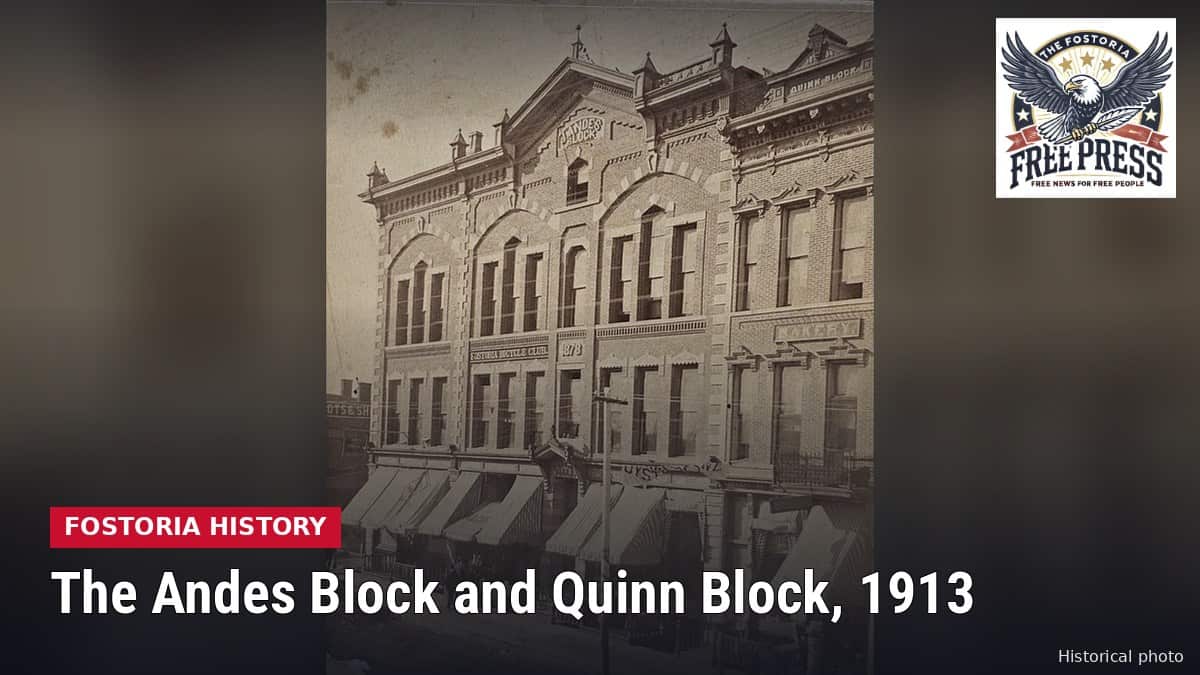
The Andes Block and the Quinn Block at Main and Center streets, 1913
FOSTORIA — Before supermarkets, chain stores and parking lots, Fostoria shopped on foot. Between the 1880s and the 1910s, Main Street and the blocks around it were lined with grocers, butchers, bakers, restaurants, shoe dealers and doctors’ offices, most of them run by the families who lived upstairs or a few streets away.
This installment of our local history series looks at a handful of those storefronts through old photographs. Our main sources are history columns republished by the Fostoria Area Historical Society. Where a photo came to us without a firm date or address, we say so.
Quick timeline
| Year | What happened |
|---|---|
| 1860 | Blacksmith John Andes, born in Bavaria in 1836, moves to Fostoria. |
| 1878 | The Andes Block opens at Main and Center, with the Andes Opera House on its top floor. |
| 1884 | A photo of the Wise & Green Grocery on North Main shows potatoes in baskets, coal oil lamps and a coffee grinder. |
| 1910 | The Andes Opera House closes because it cannot meet state fire regulations. |
| 1913 | The view at the top of this story is made of the Andes and Quinn blocks. |
| 1982 | The Andes Block is refaced as part of the downtown Streetscape program. |
| 2001 | The Fostoria Downtown Historic District is listed on the National Register of Historic Places. |
The corner of Main and Center
The building at the top of this story was the anchor of downtown. According to the historical society archive, John Andes learned the blacksmith trade in Tiffin and came to Fostoria in 1860. He had the Andes Block built in 1878, and the Andes Opera House, which filled the whole top floor, opened the same year. It brought in touring companies from New York and Chicago that were playing towns along the Baltimore & Ohio Railroad, until it closed in 1910 because it could not meet state fire regulations.
Just north of it stood the Quinn building, with Quinn’s Bakery on the ground floor and the Quinn family living upstairs. The family’s son, John Quinn, became a New York lawyer and a collector of internationally famous art. The historical society notes that he never lived in Fostoria again but is buried in St. Wendelin Cemetery.
The Andes Block still stands. It was refaced in 1982 and is part of the Fostoria Downtown Historic District, listed on the National Register of Historic Places. The 1896 Sanborn fire insurance map of downtown, held by the Library of Congress, shows how tightly the brick business blocks were packed around the corner.
Dinner is ready, 25 cents
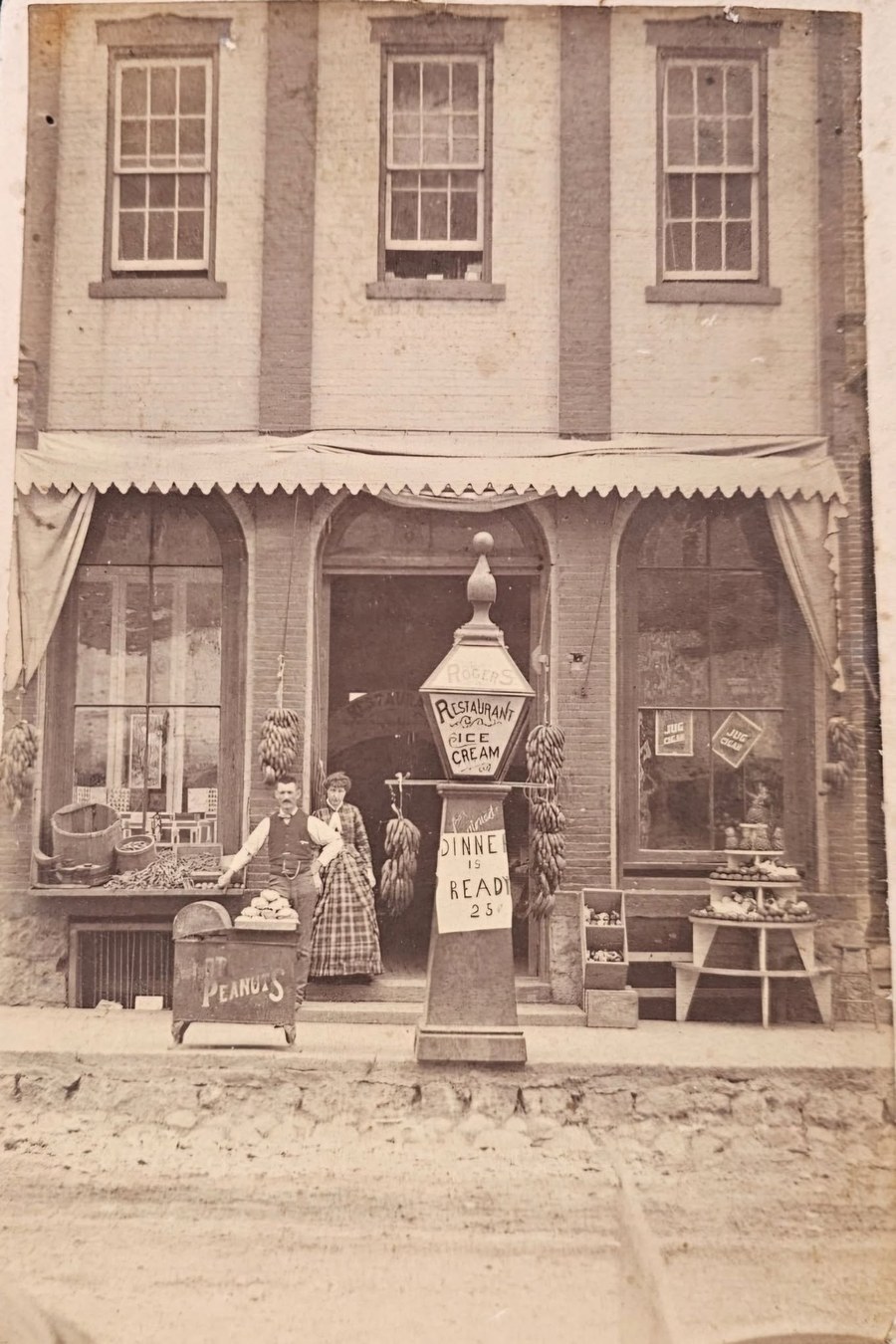
Rogers Restaurant, Fostoria, believed to date to the 1880s
The photo above is one of the liveliest storefront views in Fostoria’s past. A tall lamp-post sign reads “Rogers — Restaurant — Ice Cream,” and a placard tacked below it promises “Dinner is Ready, 25 c.” Bunches of bananas hang in the doorway, fruit is stacked on a tiered stand, a crate of produce sits on the sill, and “Jug Cigar” signs hang in the window. A man in a vest and a woman in a long plaid dress stand at the door.
A note that came with the photo dates it to the 1880s and places it on South Main Street. We were not able to confirm the address in directories, so treat both as likely rather than certain.
Groceries, meat and provisions
The historical society’s 1981 column “Long Ago Photos of Main Street” describes an 1884 photo of the Wise & Green Grocery, in the room next to the corner of Main and Tiffin. It shows produce in baskets, coal oil lamps, dishes, spittoons, canned goods, a hand-cranked coffee grinder and a round sign advertising “Standard Oil Co. Stove Gasoline.” Customers either bought their coffee freshly ground or took the beans home to grind themselves.

England & Caldwell, Fostoria, early 1900s
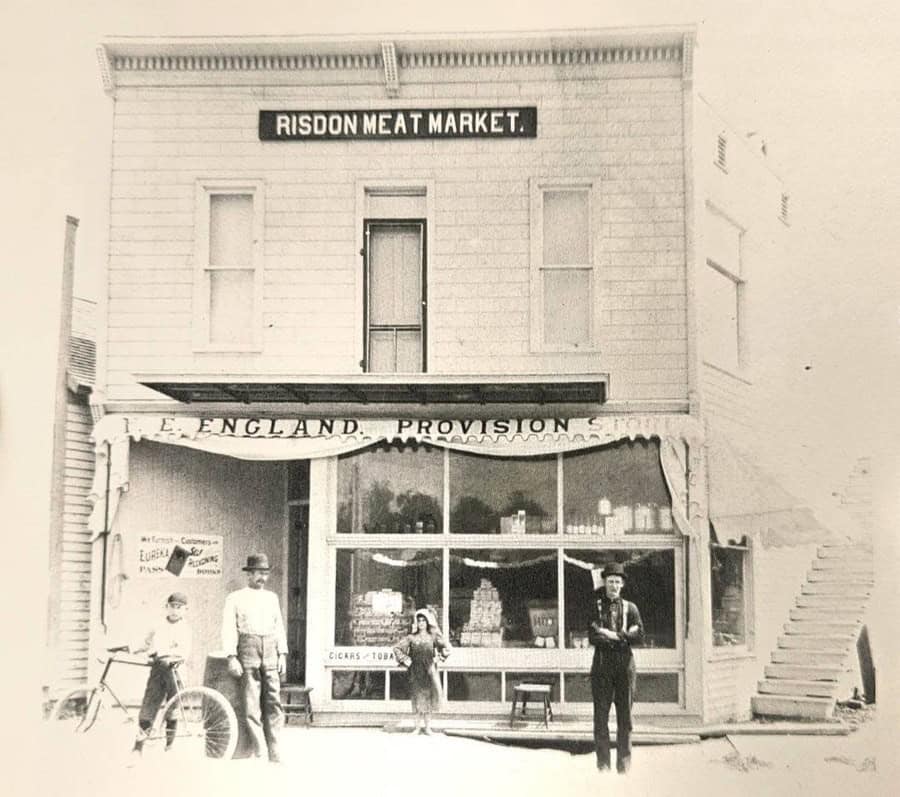
The Risdon Meat Market building with an England Provision storefront, early 1900s
Two more early 1900s photos show the kind of business that fed a growing town. One shows the England & Caldwell store, its awning lettered with the firm’s name and its staff lined up on the walk. The other shows a two-story frame building with a “Risdon Meat Market” sign on top and “England Provision” over the storefront, with a bicycle parked out front. The Risdon name recalls one of the two villages that merged to form Fostoria in 1854. We could not find directory listings that date these stores or tell whether the England in both signs was the same merchant.
Cafes, candy and ice cream
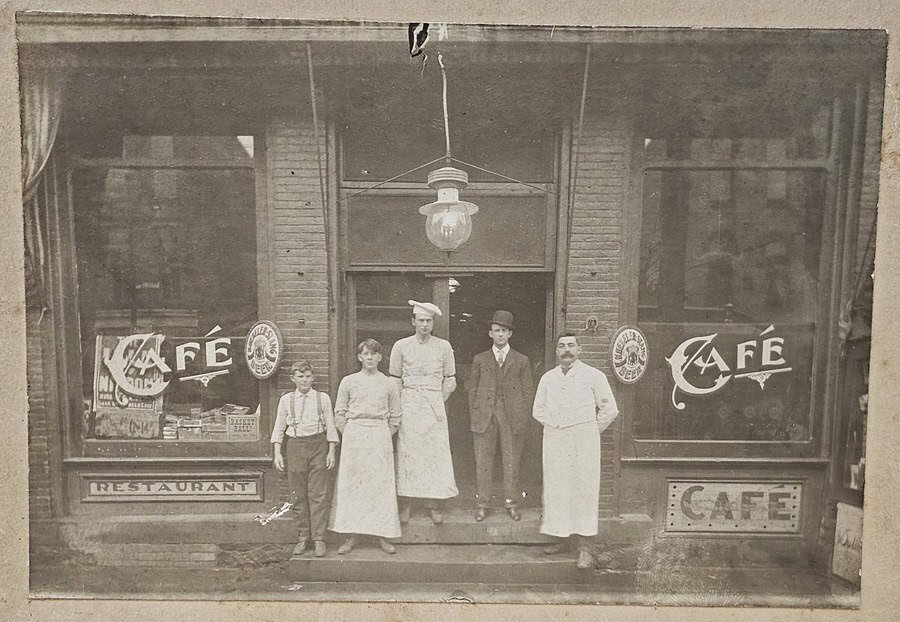
A Fostoria cafe and its staff, early 1900s
Lunch rooms and confectioners were everywhere downtown. The same 1981 column recalls that George and Ida Hayden took over the old grocery room in the early 1900s, making their own ice cream, candies and roasted nuts under slowly turning ceiling fans. That room later became The Candyland. In the photo above, the staff of another Fostoria cafe pose in white aprons beneath “CAFE” lettered on the glass.
News from the corner
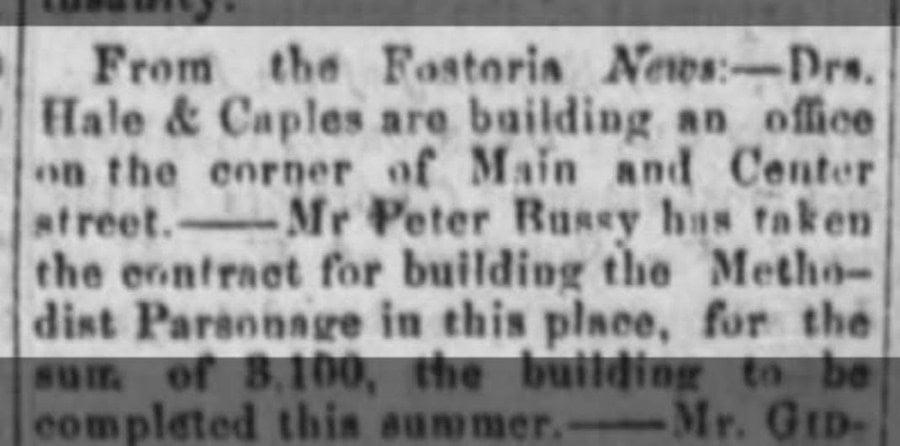
An item reprinted from the old Fostoria News, 1800s
Small items in the papers tracked every new building. This undated 19th-century clipping, reprinted “From the Fostoria News,” reports that “Drs. Hale & Caples are building an office on the corner of Main and Center street,” and that Peter Bussy had taken the contract to build the Methodist parsonage “for the sum of $3,100.” Doctors, lawyers, tailors and printers often rented the upper floors above the shops, the historical society notes.
Do you have a photo of your family’s old store? We would like to hear from you.
More from FFP: 10 Original Business Ideas to Revitalize Fostoria’s Main Street and The “Hidden Tunnels” Beneath Fostoria.
Photo note: Photographs and images published before 1931 are in the public domain in the United States. Historical images in this article are shared for educational and historical purposes.
Sources
- Fostoria Area Historical Society, W. Center From Early Days to Now: https://www.fostoriamuseum.org/w-center-from-early-days-to-now/
- Fostoria Area Historical Society, Underground Reservoir Service on West Center Street: https://www.fostoriamuseum.org/underground-reservoir-service-on-west-center-street/
- Fostoria Area Historical Society, Long Ago Photos of Main Street (1981): https://www.fostoriamuseum.org/long-ago-photos-of-main-street/
- National Park Service, National Register of Historic Places, Fostoria Downtown Historic District: https://npgallery.nps.gov/AssetDetail/NRIS/01001065
- Library of Congress, Sanborn Fire Insurance Map, Fostoria, Ohio, 1896: https://www.loc.gov/item/sanborn06698_003/
- Wikipedia, Fostoria, Ohio (founding of Rome and Risdon): https://en.wikipedia.org/wiki/Fostoria,_Ohio


