

New York Times Claims Man Killed by Federal Agents in Minneapolis Was Holding a Phone, Not a Gun
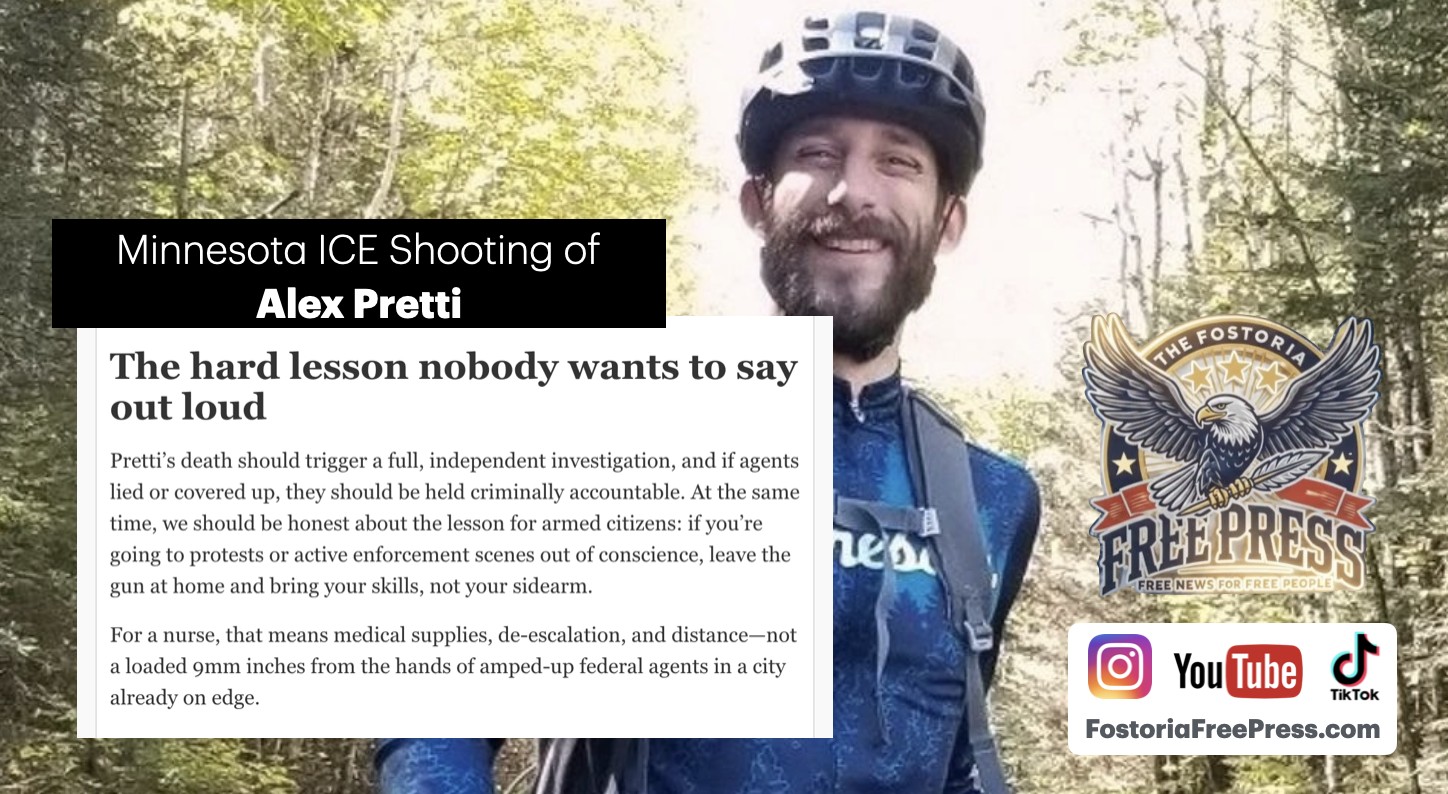
Alex Pretti’s killing has rightly provoked outrage and demands for truth, but one uncomfortable fact keeps getting buried: he still chose to show up armed, with a loaded handgun, in the middle of an active ICE/Border Patrol operation. That decision was legal under Minnesota’s carry laws, yet from a judgment and risk standpoint it was reckless—and tragically helped create the conditions for exactly the kind of catastrophe he was protesting.
According to a New York Times article. NTY claims “Videos analyzed by The New York Times appear to contradict federal accounts of the shooting.”
Conflicting narratives about the shooting
Federal officials initially claimed Pretti “approached agents with a gun” and “violently resisted,” portraying the shooting as a clear-cut case of self‑defense. But synchronized videos analyzed by major outlets show him holding a phone in his right hand and raising his left as agents grabbed him, with a pistol only produced from his waistband after he was already on the ground, moments before at least 10 shots were fired in about five seconds. A CBP report to Congress acknowledges two agents fired their weapons but does not claim Pretti reached for the gun, and a Minnesota judge has issued an order to preserve all federal evidence amid state concerns about obstruction.
A lawful gun owner in the worst possible place
Pretti was by all accounts a dedicated ICU nurse, a lawful gun owner with a permit, and had no criminal record. None of that changes the core reality that he brought a loaded concealed handgun into a volatile protest scene directly around armed federal agents conducting an immigration crackdown. In an environment where agents are already keyed up about ambushes, agitators, and “armed threats,” a citizen inserting himself within arm’s reach of officers while armed—even legally—is almost guaranteed to be interpreted in the worst possible light the second anything gets chaotic.
Supporters frame him purely as a Good Samaritan stepping in to protect a woman from pepper spray, but the optics matter: to the agents, he was an unknown male, at close range, during a tense enforcement action, with a sidearm tucked at his waist. When you choose to walk into that situation with a gun, you are not just exercising a right; you are adding another lethal variable into a scene where split‑second misreads already get people killed.
If he wanted to help, where was the medical gear?
What makes this even harder to defend is Pretti’s profession. He wasn’t just any bystander; he was a trained ICU nurse who had just watched his city absorb one federal shooting and was well aware tension was sky‑high. If his primary mission was to protect and help people, why was the tool he brought to the front line a pistol, not a trauma kit?
A critical care nurse showing up with tourniquets, chest seals, gloves, and a clearly marked medic bag would still be taking a risk—but it would send a completely different signal to everyone there. Protest medics operating in other cities have learned to make themselves as visibly non‑threatening as possible: no concealed weapons, high‑visibility markings, and distance from direct confrontations whenever they can. Pretti, by contrast, arrived as a dual‑identity figure—healer by training, armed civilian by choice—and that ambiguity proved lethal once bodies started colliding and hands went to holsters.
Rights vs. judgment in a live operation
In the Second Amendment debate, people love to stop at “it was legal.” Legality is a floor, not a standard of wisdom. It was legal for Pretti to carry; it was also, in context, a profoundly bad idea to exercise that right in the tight orbit of ICE/Border Patrol operations he knew were already under fire for use of force.
That doesn’t excuse the agents’ actions; the video evidence and conflicting federal accounts raise serious questions about whether they escalated, misperceived, or outright overreacted when they opened fire on a man who appeared to be holding a phone. But it does complicate the narrative of pure martyrdom. When you strap on a gun and step into the hottest part of a federal operation, you are making a choice that amplifies the danger for yourself and everyone around you, no matter how noble your intentions.
The hard lesson nobody wants to say out loud
Pretti’s death should trigger a full, independent investigation, and if agents lied or covered up, they should be held criminally accountable. At the same time, we should be honest about the lesson for armed citizens: if you’re going to protests or active enforcement scenes out of conscience, leave the gun at home and bring your skills, not your sidearm.
For a nurse, that means medical supplies, de‑escalation, and distance—not a loaded 9mm inches from the hands of amped‑up federal agents in a city already on edge.



Leave a Reply
Want to join the discussion?Feel free to contribute!