
What is an extendable baton? – Are they legal to carry in Ohio? – The Fostoria Free Press
An extendable baton is a collapsible metal club that can be carried discreetly and quickly expanded for striking, and in Ohio it is generally legal to own but legally risky to carry—especially if concealed—because it will usually be treated as a “deadly weapon” under state law.
What is an extendable baton?
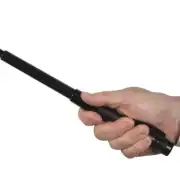
An extendable (or expandable/collapsible) baton is a telescoping steel or alloy stick that collapses down to a compact handle and “snaps” out to full length with a flick of the wrist. It is designed to concentrate force into a small impact area, making it capable of breaking bones, causing serious injury, or even death if misused. These batons are commonly issued to law enforcement and some security professionals as an intermediate‑force tool for control and defense.
How Ohio law looks at batons
Ohio does not have a statute that mentions extendable batons by name, so they are handled under the general weapons sections of the Ohio Revised Code. Under ORC 2923.11, a “deadly weapon” is “any instrument, device, or thing capable of inflicting death, and designed or specially adapted for use as a weapon, or possessed, carried, or used as a weapon.” Because an extendable baton is designed as a striking weapon and can clearly inflict serious harm, most legal analyses assume it fits this deadly‑weapon definition.
Crucially, Ohio’s concealed‑carry statute (ORC 2923.12) makes it a crime to carry a concealed “deadly weapon” other than a handgun, with violations prosecuted as illegally carrying a concealed weapon. That means a concealed baton (for example, collapsed on a belt under a shirt, in a pocket, or in a bag “ready at hand”) can lead to a charge, even if no specific “baton law” exists.
Is it legal to carry an extendable baton in Ohio?
Legal summaries generally describe batons in Ohio as “legal but vague,” which reflects the gap between no specific ban and the broad deadly‑weapon and concealed‑carry rules. Key practical points:
-
Open carry vs. concealed: Ohio law restricts concealed deadly weapons, not openly carried impact tools in general. Carrying a baton openly on your belt in plain view is more defensible than concealing it, but an officer could still treat it as suspicious depending on context.
-
Self‑defense context: Ohio allows an affirmative defense if a deadly weapon was carried for lawful self‑defense (for example, traveling to or from a job that makes you particularly vulnerable, or having a weapon readily at hand at home). That is a defense in court—not a guarantee you will avoid arrest or charges in the field.
-
No special “less‑lethal” carve‑out: Even though people buy batons as “less‑lethal” tools, Ohio law does not give them the same easy treatment as pepper spray; pepper spray is generally not considered a dangerous weapon, but a baton is.
Because of this, many firearm and self‑defense resources warn that carrying a concealed baton in Ohio can expose you to a concealed‑weapon charge, and even open carry could be scrutinized if it appears you are arming yourself for a fight rather than for legitimate defense.
Practical takeaways and cautions
In practical terms, Ohio residents can typically buy and possess extendable batons without issue, and simply owning one at home is not prohibited. The legal risk rises when you carry it in public, especially concealed or into restricted areas like schools, courthouses, or government buildings where “deadly weapons” and “dangerous ordnance” are tightly controlled.
For someone considering a baton for personal protection in Ohio:
-
Expect it to be treated as a deadly weapon if you carry or use it.
-
Avoid concealing it on your person; that is where concealed‑weapon laws are most clearly triggered.
-
Understand that if you ever deploy it, prosecutors and courts will analyze whether your use of force was justified under Ohio self‑defense law, just as they would with any other weapon.
Given how fact‑specific and somewhat “gray” baton cases can be in Ohio, anyone who wants to carry one regularly should strongly consider speaking with an Ohio criminal defense or firearms attorney to get advice based on the latest case law and their specific situation.
