
Colonel James M. Neibling and the 21st Ohio: Findlay’s Civil War Regiment
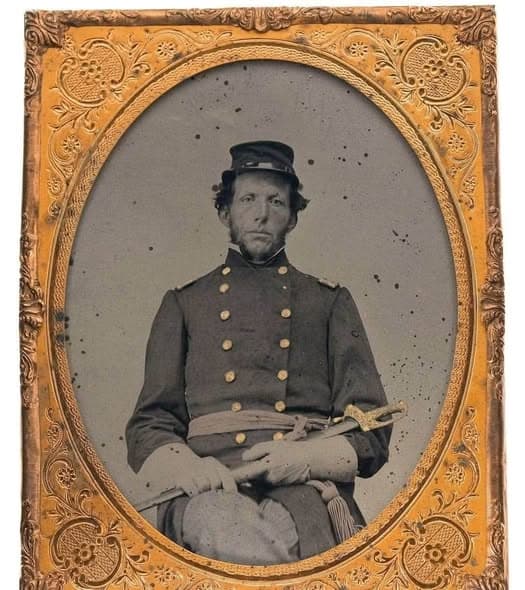
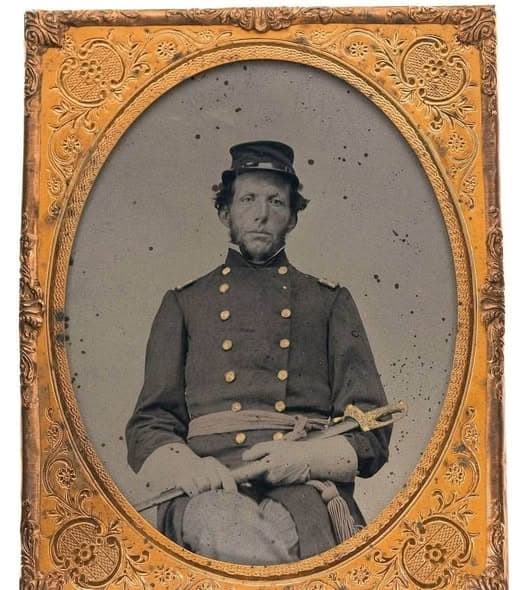
Civil War-era cased portrait of a Union officer, identified in a Love Findlay History Facebook group post as Col. James M. Neibling of Findlay.
FINDLAY — In the days after President Abraham Lincoln called for 75,000 volunteers in April 1861, James M. Neibling of Findlay stood before a patriotic meeting and said he was ready to go again. An 1886 Hancock County history records that he told the crowd he had shouldered a musket 14 years earlier, “when only a boy,” in the Mexican War. He then presented a roll of enlistment. In a brief time, 72 names were down, and Neibling formed the volunteers into line and marched them down Main Street.
A second rally followed on April 23. Hancock County soon had three companies, later mustered into the 21st Ohio Volunteer Infantry as Companies A, F and G. The officers of Company A were James Wilson, captain; Dwella M. Stoughton, first lieutenant; and George Foreman, second lieutenant. The ladies of Findlay presented flags to Companies A and F in front of the courthouse, and Mrs. James M. Neibling made the presentation speech. The volunteers rendezvoused at the fairground in East Findlay, on the Mt. Blanchard road, a camp dedicated as Camp Neibling in his honor.
A three-month start
The 21st Ohio was organized at Camp Taylor, near Cleveland, on April 27, 1861, and Neibling of Findlay was elected lieutenant colonel. The regiment served in western Virginia under Gen. J.D. Cox and saw action at Ripley and Scary Creek. It was mustered out Aug. 12, 1861, at Columbus. On the way home, Eli S. Reed of Findlay, commissary of the regiment, died at Cincinnati.
The regiment was reorganized for three years’ service and mustered in Sept. 19, 1861, at Findlay, by Capt. E. Morgan Wood of the 15th U.S. Infantry. Men came from Hancock, Wood, Lucas, Defiance, Fulton, Williams and Henry counties. Jesse S. Norton entered service as colonel. Neibling, then 31, again served as lieutenant colonel.
Colonel of the 21st
Norton resigned Dec. 20, 1862, and Neibling was promoted to colonel the same day. An 1881 Hancock County history later recorded that he held the colonelcy until he lost his right arm at New Hope Church, Georgia, on May 28, 1864. Official roster records state that he resigned Dec. 6, 1864.
The 21st Ohio remained in service until July 25, 1865, when it was mustered out at Louisville, Kentucky. For Findlay, the regiment’s story is inseparable from the officer whose name went on the first volunteer camp and who led Hancock County men from the courthouse square into the western theater of the Civil War.



Leave a Reply
Want to join the discussion?Feel free to contribute!