

DEVELOPING | Toledo Tool & Die in Maumee has been identified as the source of an oily industrial-water leak that reached Swan Creek
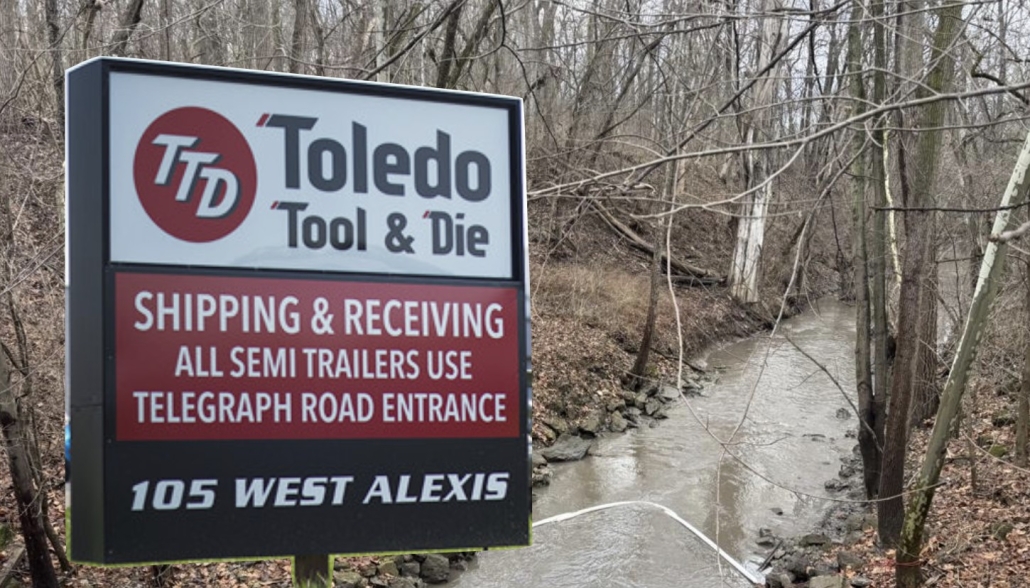
Toledo Tool & Die in Maumee has been identified as the source of an oily industrial-water leak that reached Swan Creek near Swan Creek Metropark, prompting an emergency response and cleanup but, so far, no reported injuries or ongoing discharge. The question that is waiting to be answered is: was “the leak” was turned off ,or was there an actual point of failure.
What happened at Swan Creek
-
On Friday morning, responders discovered an oily substance entering Swan Creek from a ditch near Glendale Avenue, outside the formal boundaries of Swan Creek Metropark in south Toledo.
-
A city of Toledo spokesperson later confirmed the leak had been traced back to Toledo Tool & Die’s Maumee facility; the Ohio EPA identified the material as an oily water mixture used in industrial processes.
Emergency response and containment
-
Toledo Fire & Rescue was dispatched around 9:15 a.m., and by about 1 p.m. city officials reported that the system responsible for the discharge at Toledo Tool & Die had been shut down, stopping the active leak.
-
The National Response Center, the federal point of contact for all oil and hazardous releases, was notified, which triggers federal spill‑response protocols and ensures the incident is logged in a national database.
-
Toledo’s Environmental Services department coordinated with Toledo Refining Company to place a hard boom on the creek to corral the slick, while a vacuum tanker was deployed at Heilman Ditch (Laurentide Lane and Cass Road) to begin extracting the oily mixture.
-
Ohio EPA on‑scene coordinators are working with local responders and the company, and an environmental contractor hired by Toledo Tool & Die is handling much of the field cleanup work.
Potential environmental impact
-
Swan Creek is an important green corridor and wildlife habitat, with forested banks, migratory bird habitat, and popular recreation trails in Swan Creek Preserve Metropark, so even a relatively small spill can affect water quality, aquatic life, and recreation if not contained quickly.
-
Officials have said there is currently no visible leak at the original location and no continuing discharge, but downstream impacts (like oily sheen or affected vegetation and wildlife) will depend on how much product entered the creek before the system was shut off and how effective boom and vacuum operations are over the next several days. The question that is waiting to be answered is: was “the leak” was turned off ,or was there an actual point of failure.
About Toledo Tool & Die Company
-
Toledo Tool & Die is a long‑established metal‑stamping and tool‑and‑die manufacturer with a roughly 105,000‑square‑foot facility that designs and builds tooling and runs production for automotive and other industrial customers; the company lists locations in the Toledo area and Maumee.
-
Like many heavy‑industrial shops, it uses oils and water‑based coolants in machining and forming operations, which must be handled under strict waste‑management and wastewater‑discharge rules to prevent exactly this kind of oily‑water release.
Past violations, OSHA fines, and lawsuits
-
In 2016, an OSHA inspection following a workplace accident found deficiencies such as inadequate machine guarding and unsafe two‑hand controls, leading to citations and federal penalties against Toledo Tool & Die.
-
In 2018, OSHA again cited the company and proposed fines of about $43,903 for multiple serious violations, including failures in lockout/tagout procedures intended to prevent workers from being injured by unexpected machine start‑ups.
-
Separate from safety inspections, former employee Melvin Marek Jr. filed a federal lawsuit in 2016 (Marek Jr. v. Toledo Tool & Die Co., Inc., Case No. 3:16‑cv‑03005) alleging the company systematically underpaid hourly workers by not paying legally required overtime; court filings describe it as a putative collective action under the Fair Labor Standards Act and related Ohio law.
-
Public EPA compliance databases and document repositories show routine regulatory oversight but, as of now, do not yet list a finalized enforcement action specifically tied to this Swan Creek oily‑water event, which is normal because spill investigations and formal penalty decisions often lag days to months behind the initial emergency response.
What happens next
-
Ohio law and federal rules require facilities to report spills that leave their property and exceed reportable quantities to Ohio EPA, local emergency planners, fire departments, and the National Response Center, so regulators will now investigate whether Toledo Tool & Die violated discharge permits, storage rules, or reporting timelines.
-
Depending on what investigators find, outcomes can range from a formal Notice of Violation and mandatory corrective actions to administrative penalties or negotiated settlements; any final enforcement order or consent agreement would typically become public through Ohio EPA records or EPA’s Enforcement and Compliance History Online (ECHO) system.
If you share your preferred angle (environmental justice, worker safety record, or corporate accountability), the article can be tightened into a publish‑ready post tailored to your audience.



Leave a Reply
Want to join the discussion?Feel free to contribute!