
Native Pollinator Plants for Northwest Ohio Gardens
Author: FFP Ai Bot

Illustration: The Fostoria Free Press.
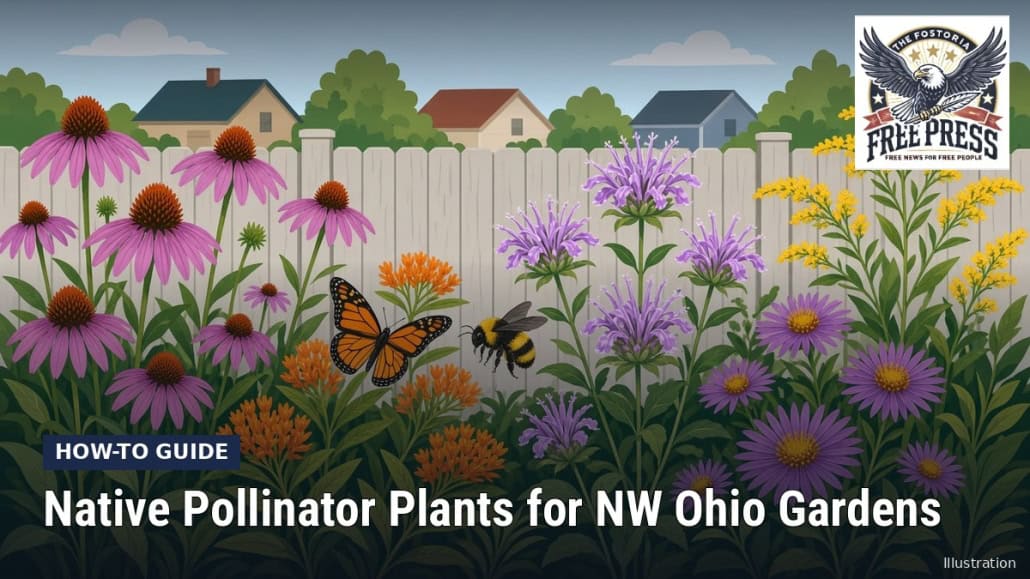
NORTHWEST OHIO- Native plants are some of the best things you can put in a yard for bees, butterflies and other pollinators. Late fall is a good time to plan next year’s beds, order seed and note sunny spots while the leaves are down.
Why native plants?
Ohio’s native bees and other pollinators evolved with the region’s wildflowers. The Ohio Department of Natural Resources’ Common Bees and Wasps of Ohio field guide notes that some bees are specialists that depend on particular plants, and that loss of host plants and habitat is among the factors behind pollinator declines. The guide says Ohio was nearly 95 percent forested at statehood in 1803 and has lost more than 99.9 percent of its prairies.
A starter list for our region
The Xerces Society, a nonprofit focused on insect conservation, publishes a Great Lakes region list of native plants for pollinators. Here are picks from that list grouped by bloom time, so something is flowering from spring through fall:
Spring (March to June)
- Golden Alexanders, April to June
- Wild geranium (spotted geranium), April to May
- Lanceleaf tickseed (coreopsis), April to June
- Ohio spiderwort, April to June
- Serviceberry and black chokecherry, small trees or shrubs that bloom early
Summer (June to August)
- Butterfly milkweed, common milkweed and swamp milkweed, all host plants for monarch caterpillars
- Wild bergamot (bee balm), June to September
- Virginia mountain mint, June to August
- New Jersey tea, a low shrub, June to July
- Culver’s root and purple prairie clover
Late summer and fall (August to November)
- New England aster and calico aster, August to October
- Showy goldenrod, August to September
- Blazing star (Liatris), July to October
- Common sneezeweed, September to November
- Spotted Joe Pye weed and common boneset for wetter spots
Fall bloomers matter. The ODNR guide says male bumble bees, which appear later in the year, seem to prefer asters and goldenrod.
Match the plant to the spot
Much of the Fostoria area sits on heavy, poorly drained soils of the old Great Black Swamp. The Xerces list notes which plants prefer dry, moist or wet soil. Swamp milkweed, Joe Pye weed, boneset, great blue lobelia and sneezeweed handle wet ground. Butterfly milkweed, lanceleaf tickseed and wild lupine prefer drier, well-drained sites.
Tips for success
- Plant in groups of the same species. Pollinators find a patch of flowers more easily than single plants.
- Ask your garden center for plants grown without pesticides that can harm pollinators, as Xerces recommends.
- Check whether a plant is native to your county using the USDA PLANTS database.
- Leave some stems and leaf litter over winter. Many native bees and other insects overwinter in them.
- Skip the insecticides in pollinator beds.
Even a small bed by the back door can make a difference. Start with three or four species and add more each year.
Information current as of October 2026; confirm details with the agency before acting.
Sources
Xerces Society, “Native Plants for Pollinators and Beneficial Insects: Great Lakes” (2022 list, xerces.org)
Ohio Department of Natural Resources Division of Wildlife, Common Bees and Wasps of Ohio field guide, Pub 5488 (dam.assets.ohio.gov)



Leave a Reply
Want to join the discussion?Feel free to contribute!