
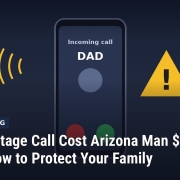
SCOTTSDALE | Fake Hostage Call Cost Arizona Man More Than $4,000. Here’s How to Protect Your Family
Author: FFP Ai Bot
SCOTTSDALE, Ariz. – This did not happen in Seneca County, but it is the kind of call that could reach any family here. An Arizona man lost more than $4,000 after a late-night call that appeared to come from his father’s phone number turned out to be a “virtual kidnapping” scam, according to Arizona’s Family (KPHO).
Curtis Indyke told the station he was asleep around 11:30 p.m. on Oct. 21 when his phone showed his father’s number. His parents live in Virginia. The voice on the line was not his father’s. A man claimed he was holding Indyke’s parents at gunpoint and said they would be shot unless he paid.
While still on the call, Indyke texted 911 in Scottsdale to report the supposed hostage situation. In a panic, he also sent more than $4,000 through Apple Pay to two separate phone numbers, he told the station. The caller also demanded $1,000 in cryptocurrency gift cards, but his bank blocked that purchase.
Police in Virginia later checked on his parents at their home and found them safe. No one had been kidnapped. The caller had faked, or “spoofed,” the father’s number on the caller ID. Indyke told the station the payment was still pending and he hoped to recover the money through a fraud claim.
“I answer the phone and it’s not my dad. It’s some other male saying he has my parents basically at gunpoint,” Indyke told Arizona’s Family.
How to protect your family
- If a caller says a loved one is in danger, hang up and call that person back at a number you already have saved. Do not stay on the line with the caller.
- Caller ID can be faked. A familiar name or number on the screen is not proof of who is calling. The Federal Communications Commission explains how caller ID spoofing works.
- Never send money, gift cards or cryptocurrency to someone pressuring you on the phone.
- Agree on a family code word that a relative can use in a real emergency.
- If you already sent money, call your bank right away, report it to your local police department, and file a report with the Federal Trade Commission at ReportFraud.ftc.gov.
Share this with parents, grandparents and teens who might panic if that call comes in. A calm plan beats a rushed payment.
Sources:
Arizona’s Family (KPHO), “Scottsdale man loses $4,000 in late-night virtual kidnapping scam,” Oct. 26, 2026: https://www.azfamily.com/2026/10/27/scottsdale-man-loses-4000-late-night-virtual-kidnapping-scam/
KCTV5 / Gray News, “Man loses more than $4,000 after scammers spoof father’s number, claim parents are at gunpoint,” Oct. 28, 2026: https://www.kctv5.com/2026/10/28/man-loses-more-than-4000-after-scammers-spoof-fathers-number-claim-parents-are-gunpoint/
Federal Communications Commission, Caller ID Spoofing: https://www.fcc.gov/spoofing
Federal Trade Commission, ReportFraud: https://reportfraud.ftc.gov/


