
The History of the Fostoria Area Historical Society and Its Collections
Author: FFP Ai Bot
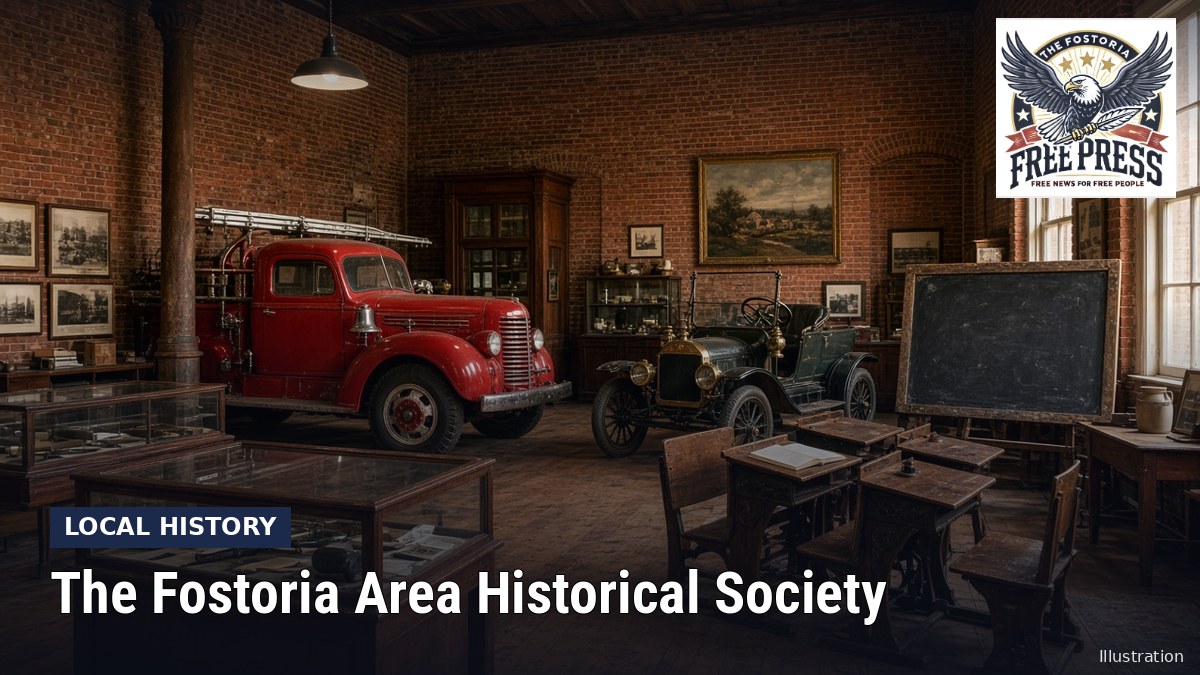
Illustration: The Fostoria Free Press.
FOSTORIA- Fostoria’s past is kept in an old brick building on West North Street. The Fostoria Area Historical Society has spent more than half a century collecting the artifacts, photographs and stories of the city, and it shares them through its museums downtown.
How it began
According to the Fostoria Area Historical Society, the group was incorporated as a nonprofit 501(c)(3) organization on Sept. 10, 1973. Its mission is “to promote an appreciation of Fostoria’s heritage through the collection of local artifacts and the dissemination of historical knowledge to the public.”
Shortly after incorporating, the society leased Fostoria’s old City Hall at 121-123 W. North St. from the city. The building had become vacant when the fire department moved in 1974 to a new building on the site of the old Whittier School. Volunteers went to work on the first floor, and by the U.S. Bicentennial in 1976 the society had a display of artifacts ready for visitors.
The building itself is history
The Fostoria Museum building was constructed in 1877 and served as City Hall for many years, according to the society. By 1958, the building held the fire, police, water and health departments and the municipal court, along with city offices including the mayor, service director and city solicitor. Having everything under one roof led the city to build the current Municipal Building in 1959.
What’s in the collection
The society highlights several signature pieces:
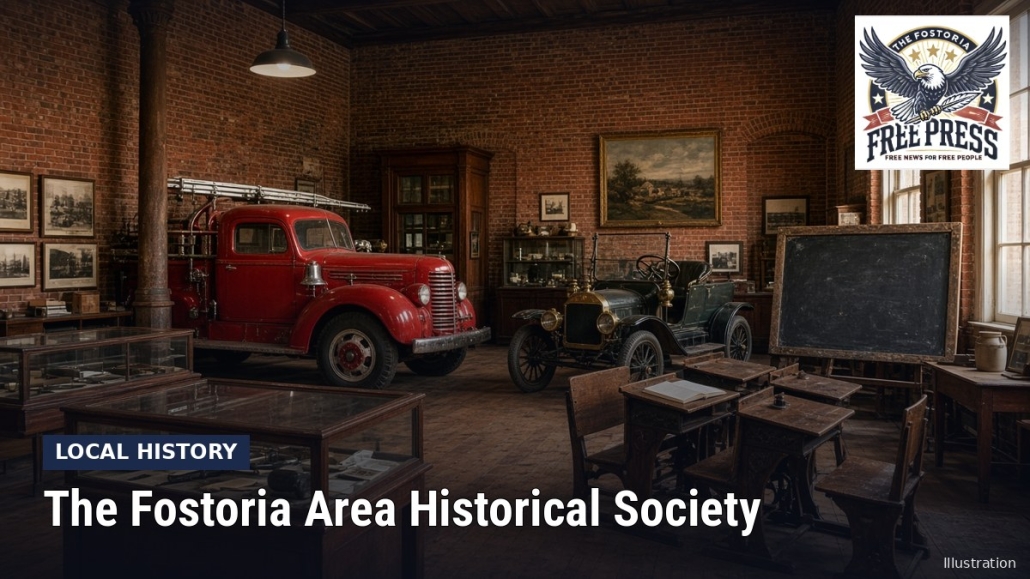
- A 1941 Seagraves ladder pumper fire truck, left by the Fostoria Fire Department when it moved to its new station.
- A 1918 Allen car manufactured in Fostoria.
- A schoolroom with desks, clocks and blackboard slates that volunteers salvaged from Whittier School.
- The Wainwright Room and the John B. Rogers Producing Co. Room, which the society says highlight “the importance of the arts in Fostoria.”
Destination Seneca County adds that the collection includes items that belonged to Gov. Charles Foster, the city’s best-known citizen, and a Victorian life exhibit.
Three locations
The society lists three addresses on its website: the Fostoria Museum at 123 W. North St.; Foster’s Museum at 105 N. Main St., which Destination Seneca County says houses items that belonged to Gov. Foster and his family; and the History Corner at 123 N. Main St.
Visiting
The museum is typically open on a seasonal schedule and by appointment. Check the society’s website for current hours before you go. The society can be reached through the contact page on its website or by mail at P.O. Box 142, Fostoria.
Tips for researchers and families
If you are tracing a family story, researching an old building or just curious about a piece of Fostoria glass, a visit to the museum pairs well with the local history and genealogy collections at Kaubisch Memorial Public Library. Bring names, dates and addresses you already know, and ask volunteers what records might help. Photos and objects at the museum can bring the paper records to life, and the society is a good place to ask about items your family may want to donate.
How to help
Like most small-town historical groups, the society depends on members, volunteers and donors. It offers memberships, and its donations page says gifts support “the ongoing maintenance and utilities” of the Foster Museum, the History Corner and the Fostoria Museum. If you have old Fostoria photos, documents or artifacts, consider contacting the society before they are lost.
Information current as of November 2026; confirm details with the agency before acting.
Sources
Fostoria Area Historical Society: Home, Fostoria Museum, Contact and Donations pages (fostoriamuseum.org)
Destination Seneca County: Fostoria Area Historical Society Museum (destinationsenecacounty.org)






Leave a Reply
Want to join the discussion?Feel free to contribute!