

Best Home Defense Firearms in 2026: Updated Recommendations with USCCA Insights
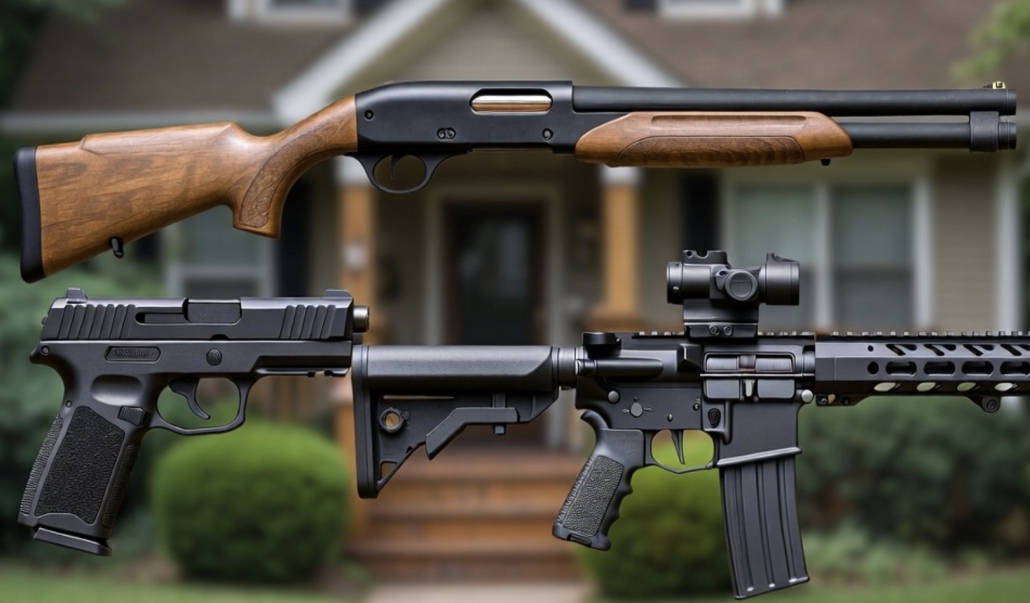
Best Home Defense Firearms in 2026: Updated Recommendations with USCCA Insights
Recent FBI data highlights the reality of home threats: over 839,000 burglaries reported in 2023, with about 7% turning violent. As USCCA contributor Duane A. Daiker emphasizes in his article Best Home Defense Guns: Top Firearm Picks, “A firearm is your best home-defense weapon. And the simplest answer to which firearm and ammo you should use is the one with which you are most comfortable.”
There is no single “best” option—proficiency, home layout, physical ability, and local laws determine the right choice. In urban areas like apartments or multi-family units (common in places like Chicago), overpenetration risks to neighbors are a major concern. Daiker stresses: “You must also consider the safety of your neighbors and the gunfire you could unintentionally be sending in their direction.” Lower-power loads or specific ammo (e.g., #4 buckshot in shotguns or frangible rounds) can help mitigate this.
Important Legal Note for Illinois Residents (including Chicago): Illinois requires a FOID card for firearm possession. The Protect Illinois Communities Act restricts “assault weapons” (many AR-15-style rifles) and high-capacity magazines (generally over 10 rounds for handguns, 15 for rifles), though grandfathered/registered items may be possessed. Legal challenges continue as of 2026, but compliance is essential. Illinois recognizes the Castle Doctrine for lawful deadly force in your home. Always verify current laws and consult professionals.
Prioritize professional training (USCCA-certified instructors recommended), test-fire options, and add a weapon-mounted light for identification in low light. Practice regularly—unloaded—in your home environment.
1. Shotguns: The Quintessential Choice
Daiker calls shotguns “extremely versatile” and potentially “the quintessential home-defense weapon,” citing ammo options from birdshot (minimal penetration) to buckshot or slugs.
Pump-actions are reliable, simple, and intimidating.
- Remington 870 Series — The classic recommendation: affordable, durable, easy to upgrade (extended tubes, rifle sights). Opt for an 18-20 inch barrel.
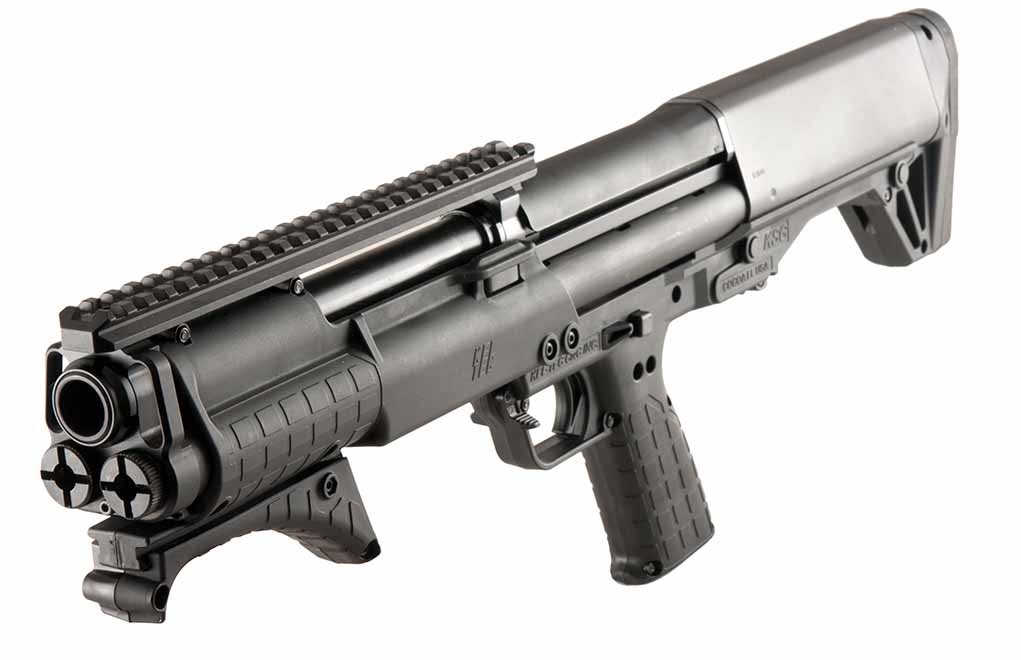
- Mossberg 590 — Similar reliability, often with modern features like mini-shell compatibility for lower recoil.
Pros: Devastating close-range power, forgiving pattern, reduced overpenetration with #4 buckshot (per testing). Cons: Recoil, length in tight spaces. Ideal for urban settings when loaded properly.
2. Handguns: Maneuverable and Practical
Handguns excel in tight spaces and quick access. Daiker notes handguns can be “notoriously poor weapons for stopping a fight” compared to larger options but recommends full-sized models for home use (no concealability needed). He suggests .40 S&W or .45 ACP for better stopping power, “although a 9mm would do.”
Modern hollow-point 9mm ammo performs excellently with higher capacity and lower recoil.
- Sig Sauer P320 (Full-Size/M17/M18) → Modular, reliable (U.S. military adopted), excellent ergonomics. Your pictured M17 variant is a strong home defense choice—add a weapon light.

- Glock Full-Size (e.g., Glock 17 in 9mm or Glock 22/35 in .40 S&W) → Simple, durable, high capacity. Daiker highlights models like the Glock 35.


Pros: Easy storage, one-handed use, lower overpenetration risk with proper ammo. Cons: Requires more skill under stress. Great for apartments due to maneuverability.
3. Carbines/Rifles: Powerful but Check Legality
Carbines offer superior stopping power, accuracy, and capacity. Daiker praises options like AR-15 or pistol-caliber carbines (PCCs) for “far superior stopping power compared to pistol rounds” and longer effective range.
In restricted states like Illinois, many AR-15 configurations qualify as banned “assault weapons”—consider compliant alternatives or PCCs (9mm carbines that avoid restrictions).
- AR-15 (Compliant Builds) → Low recoil, high capacity (where legal), frangible ammo minimizes penetration.


- Pistol-Caliber Carbines (e.g., Ruger PC Carbine) → Use handgun ammo for less penetration, often legal in more places.
Pros: Accuracy, capacity, easier to shoot well. Cons: Length, potential legal restrictions, overpenetration without special ammo.
Final Thoughts
As Daiker concludes, “Your home is your castle. It should be well-protected!” Larger firearms generally offer advantages in capacity, recoil management, and effectiveness, but always prioritize what you can operate confidently and legally.
Invest in training—USCCA classes cover fundamentals, legal aspects, and scenarios. Secure storage, a quality light, and situational awareness complete your plan.
Stay safe and prepared.



Leave a Reply
Want to join the discussion?Feel free to contribute!