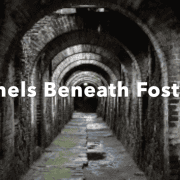
Deep beneath the quiet streets of Fost-oria Ohio, whispers have echoed for generations. Stories of hidden tunnels snaking under homes, businesses, and historic buildings. Some say they sheltered freedom seekers on the Underground Railroad. Others point to bootleggers and gangsters during Prohibition. And many locals swear the passages are still there, sealed off, bricked up, waiting to be rediscovered.
Tonight, we’re diving into the comments flooding a recent Fostoria Free Press post. Dozens of residents shared family stories, personal memories, and chilling details. What’s real? What’s legend? Let’s go underground.
It started with a simple pinned post about hidden tunnels in Fost-oria. The floodgates opened.
Gina Miklovic remembered her mom cleaning a house on West Tiffin Street right across from the old hospital. She described dark underground tunnels with lights on the walls. Out-of-town doctors supposedly stayed there. Her coworker ventured deep but got scared and turned back. Gina’s mom also mentioned another mysterious house off the county line.
Randy Dusseldorf chimed in about an underground bar from the 1940s–50s, once linked to Al Capone’s rumored house, with whispers of a tunnel beneath it.”
“Tunnels for the Underground Railroad? Several commenters pointed there. Tanya Thom noted the old routes for escaping slaves ran through this part of Ohio close to Lake Erie and the path to Canada. Stephanie Firm mentioned a historical marker in nearby Findlay. Jen Walters, whose family worked in local law enforcement, grew up hearing Fostoria was part of the network, with tunnels under some buildings and homes.
Becky Evenbeck recalled the former Gray house across from the hospital, later Dr. Bauer’s office had a tunnel tied to the Underground Railroad. Dawn Weiker’s grandma swore a Fremont Street house had one that ‘took people through it.’ Danielle Goddard heard the Presbyterian Church was connected too. Sarena Reese described ‘cubby holes’ in a basement on W. High Street, filled with stone and dirt, that looked exactly like tunnel entrances.”
Then there’s the Prohibition and gangster era. Justin Olmstead mentioned the ‘lady in red’s’ house on Fremont Street, Al Capone’s alleged spot with a stone wall and alley access. He also recalled a house at the end of Burnham Drive with a massive walk-in safe in the basement.
Charlie Parker brought up Capone tunnels in nearby Mansfield and questioned how far west Ohio’s slave tunnels would reach but others pushed back with local lore. Rebecca Ann heard Capone once had a house here, and one of the old banks was robbed, bullet holes still visible. Brenda Hay mentioned a sealed tunnel that once led to the Graystone Clinic.
Cody Thomas claimed Buckeye’s on Main still has access to a tunnel. Kenny Olinger, who owns a former armory building on the corner of Poplar and McDougal, dropped a bombshell: three tunnels in his basement, now sealed with red brick archways you can still see. The Fostoria Free Press even asked if he’d give a tour for promotion—he confirmed they’re bricked off but visible.”
Over and over, the theme repeats: many tunnels have been blocked off. Private residents sealed them. Construction and ‘street-scape’ updates covered entrances. Mark Coupe remembered old store fronts with huge steel grates leading to basements—some possibly elevators to hidden spaces. He suggested asking local historians like Leonard or Leon from the old Truth Hardware.
Patty Hickle described a blocked passage running from a big house on the corner of Union and Fremont to a brick house on the alley of West Fremont.
Even the Key Bank building gets mentioned—tunnels supposedly underneath, though most were allegedly destroyed or blocked by owners.”
So what’s the truth? Ohio was a major route on the Underground Railroad—thousands escaped through the state toward Canada. Safe houses and hidden rooms were real. But historians note that dramatic ‘tunnels under every house’ stories often grew in the 20th century as legends. Many supposed passages turn out to be old cisterns, storm drains, root cellars, or Prohibition-era smuggling routes.
Whether these tunnels carried enslaved people to freedom, whiskey during Prohibition, or just served as old utility passages, one thing is clear: Fostoria sits on layers of untold stories. Many entrances are bricked up now—hidden behind stone and dirt, or lost to time.
But the memories live on in living rooms and comment sections. If you’re in Fostoria, keep your eyes on those old basements. Who knows what lies just beneath your feet?
What do you think—fact, folklore, or a little of both? Drop your own tunnel stories below. And if you ever get that tour of Kenny’s armory basement… send pictures.
Thanks for watching. Stay curious, and watch your step.