

Why I watch 2 episodes of Seinfeld every night – The Fostoria Free Press

Edited w/Ai Assist By Josh Tolento, Editor, Founder, The Fostoria Free Press
In a world overflowing with high-stakes dramas, binge-worthy sagas, and endless streams of doom-scrolling news, there’s something profoundly appealing about tuning into a show that proudly proclaims itself to be about… well, nothing. Seinfeld, the iconic ’90s sitcom created by Jerry Seinfeld and Larry David, has become my nightly ritual: exactly two episodes before bed. Sometimes more, no less. It’s not just entertainment—it’s a deliberate choice for unwinding, laughing off the day’s absurdities, and embracing a bit of controlled chaos. Let me explain why this screenplay has earned its spot in my evening routine.

The Beauty of a Show About Nothing
At its core, Seinfeld defies traditional TV storytelling. There’s no overarching plot arc, no character development that spans seasons, and certainly no moral lessons wrapped up neatly at the end of each episode. As George Costanza famously pitches to NBC executives in one meta moment, it’s a show about nothing—everyday annoyances like waiting for a table at a Chinese restaurant, dealing with a soup Nazi, or obsessing over a puffy shirt. This lack of continuity means I can jump in anywhere without feeling lost. One night it’s “The Contest,” the next “The Marine Biologist”—no timeline to track, just pure, standalone hilarity.
This format is liberating in our plot-heavy media landscape. Unlike shows that demand your full attention to follow twists and turns, Seinfeld lets you relax into the mundane turned magnificent. Larry David has even debunked the myth that it was originally pitched strictly as “about nothing,” but the label stuck because it captures the essence: observational comedy rooted in real-life trivialities. For me, that’s perfect. After a long day, I don’t want to invest in emotional rollercoasters—I want effortless escapism.
The Hilarious Idiocy and Blunt Honesty of the Characters
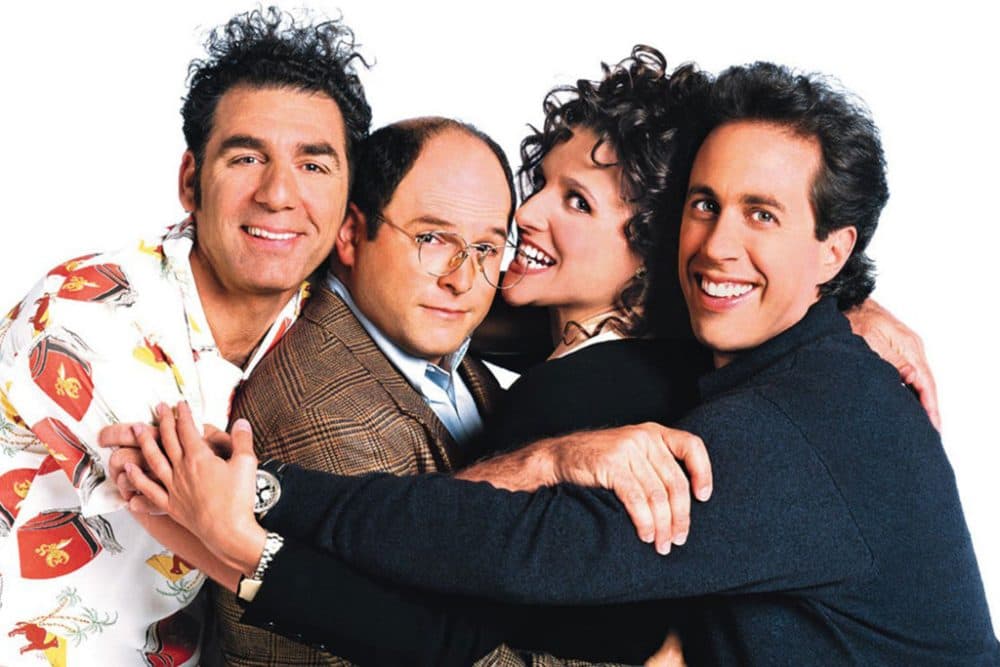
What truly hooks me, though, are the characters: Jerry, George, Elaine, and Kramer. Their stupidity and idiocy aren’t just funny; they’re a masterclass in human folly. Jerry’s deadpan observations, George’s perpetual scheming that always backfires, Elaine’s unfiltered outbursts, and Kramer’s wild entrances—it’s a quartet of flawed, relatable anti-heroes. Their blunt, cold honesty cuts through politeness like a knife, delivering lines that are equal parts savage and spot-on. Who hasn’t cringed (and laughed) at George’s “It shrank!” excuse or Elaine’s “Get out!” shove?
This raw humor is where I suspect I’ve drawn much of my own sarcasm and wit. Watching them navigate petty conflicts with zero self-awareness is cathartic—it’s like holding a mirror to our own ridiculous behaviors. Comedy like this has real power; it helps us see the absurdity in everyday pains and lightens the load. Studies even suggest that rewatching favorites like Seinfeld can boost emotional intelligence and empathy by fostering self-awareness through familiar laughs.
A Perfect Wind-Down: Better Than News or Doom-Scrolling
Finally, it’s all about relaxation. At the end of the day, I could flip on the news and get bombarded with headlines that spike my stress, or dive into online content that’s algorithmically designed to keep me hooked and anxious. Instead, two episodes of Seinfeld act as a gentle buffer, easing me into sleep with low-stakes laughs. Many fans echo this sentiment: it’s a comfort show that calms the mind, helps through tough times, and even aids in falling asleep. There’s something soothing about the familiar theme music, the New York City banter, and knowing that no matter how bad things get for the gang, it’ll reset by the next episode.
Jerry Seinfeld himself credits routines like transcendental meditation for surviving the show’s chaotic production, highlighting the value of daily rituals for mental clarity. For me, this viewing habit is my version of that—a simple, joyful anchor in a hectic world. If you’re looking to ditch the nightly news grind, give Seinfeld a try. Who knows? You might find yourself quoting “No soup for you!” as your new mantra for letting go.
