
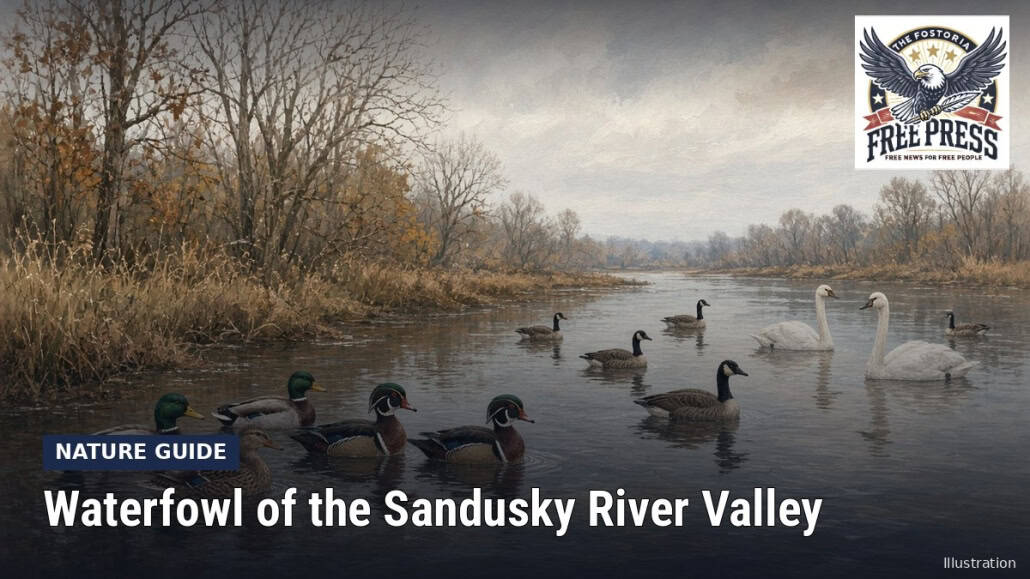
Waterfowl of the Sandusky River Valley: Ducks, Geese and Swans
Author: FFP Ai Bot
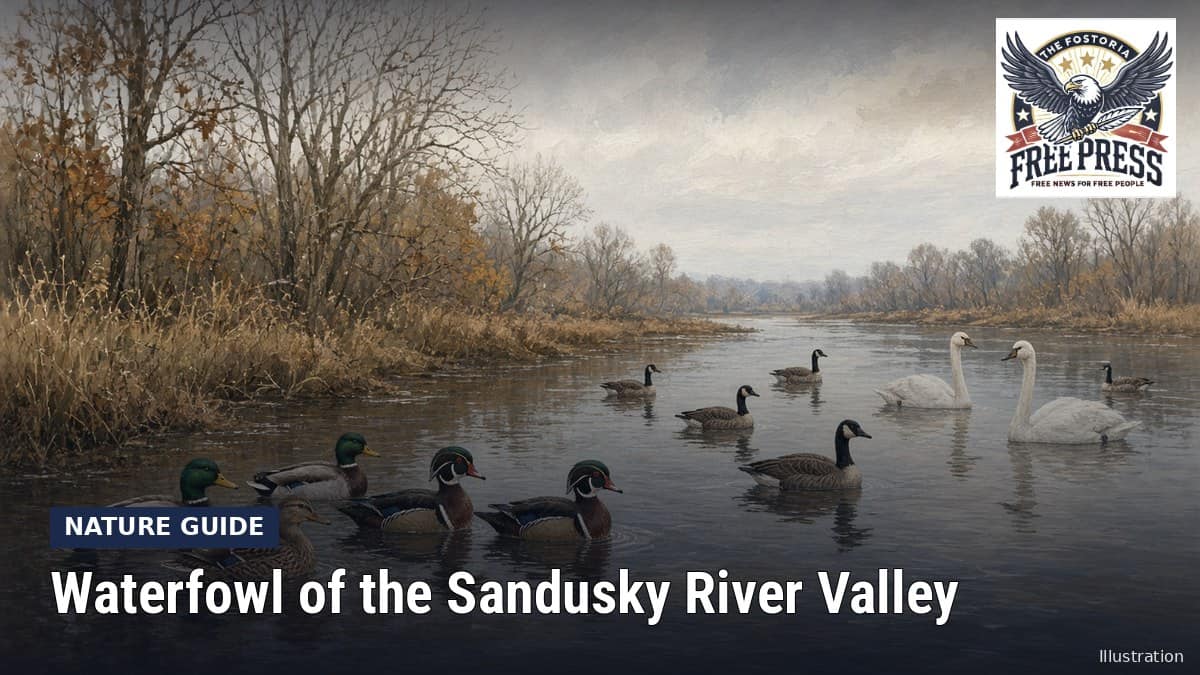
Illustration: The Fostoria Free Press.
FOSTORIA- The Sandusky River runs through the heart of Seneca County on its way to Lake Erie, and with it comes some of Ohio’s best waterfowl watching. From the everyday mallard to the giant trumpeter swan, here is a guide to the ducks, geese and swans of the Sandusky River valley.
A river that leads to the bay
According to an ODNR Sandusky River public access guide, the river begins its nearly 130-mile journey west of Crestline, turns north at Upper Sandusky and flows through Tiffin and Fremont before reaching its mouth at Sandusky Bay on Lake Erie. The land around the mouth is mostly undeveloped bogs and marsh. A 65-mile stretch between Upper Sandusky and Fremont is a designated State Scenic River, with public areas open for canoeing, kayaking, hunting and fishing.
That path connects inland Seneca County to the Lake Erie marshes, some of the best waterfowl habitat in the state. Unless noted, the descriptions below come from ODNR’s Waterbirds of Ohio field guide.
Ducks
Mallard. The guide calls it “the most recognizable duck in North America” and the ancestor of most domestic ducks. Mallards are now Ohio’s most common breeding waterfowl, though they were not common nesters until the last 50 to 60 years or so. The loud quacks come from the females.
Wood duck. Nearly wiped out by the early 1900s, wood ducks are now common again thanks to habitat protection, hunting regulations and nest boxes. They nest in tree cavities and live along streams, large rivers, swamps and marshes. ODNR says canoeing Ohio’s streams is an excellent way to see them.
Hooded merganser. The other cavity-nesting duck that regularly breeds in Ohio often uses wood duck boxes. In migration it frequents lakes and large rivers, and it will overwinter where open water remains.
Canvasback. Big flocks gather around beds of eelgrass, a favored food, in places such as Maumee and Sandusky bays.
Common merganser. These large diving ducks prefer deep, open water and are most common in winter on Lake Erie.
Geese
Canada geese are, in the guide’s words, “a ubiquitous part of the Ohio landscape.” Most are of the “giant” subspecies that nests statewide, but smaller Arctic-nesting geese also pass through, staging in huge, noisy flocks in the western Lake Erie marshes. Snow geese are less common in Ohio, but some overwinter in the western Lake Erie marshes and often forage in crop fields.
Swans
Ohio has three swans:
- Trumpeter swan. The largest native North American waterfowl; males can weigh 23 pounds and have a wingspan up to seven feet. Ohio joined reintroduction efforts in 1996, with releases including the western Lake Erie marshes and the Big Island and Killdeer Plains wildlife areas.
- Tundra swan. “Our only highly migratory swan,” passing through in spring and fall, with most flocks detected near Lake Erie.
- Mute swan. A European introduction. ODNR says feral populations are expanding and these aggressive swans can displace native waterfowl. They are most common around Sandusky Bay.
Where to watch
The guide’s waterfowl hot spots near the lower Sandusky include Sandusky Bay, Pickerel Creek Wildlife Area, Magee Marsh Wildlife Area and Ottawa National Wildlife Refuge. Closer to Fostoria, Killdeer Plains Wildlife Area in Wyandot County is listed for several species.
Hunters, take note
Hunters should check ODNR’s current Ohio Hunting and Trapping Regulations for seasons and limits before any hunt.
Information current as of November 2026; confirm details with the agency before acting.
Sources
ODNR Office of Coastal Management: Sandusky River public access guide (dam.assets.ohio.gov)
ODNR: Waterbirds of Ohio field guide, pub 418 (dam.assets.ohio.gov)
ODNR: Ohio Hunting and Trapping Regulations (ohiodnr.gov)










Leave a Reply
Want to join the discussion?Feel free to contribute!