Scammers Targeting Lost Pet Pages: What You Need to Know

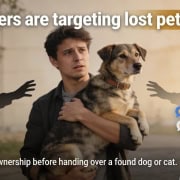
On Facebook lost-and-found pet pages, most people are genuinely trying to reunite animals with their families. But a growing problem is scammers who monitor these groups, see posts about found dogs or cats, and falsely claim to be the owner so they can take the animal for themselves. They may be looking for a “free” pet, to resell the animal, or in the worst cases, for breeding or other exploitative purposes. This creates a serious risk both for the animal’s safety and for the real family desperately searching for their pet.
How the scam typically works
Scammers watch local lost-and-found pet pages and move quickly when they see a post about a found animal. They may:
-
Message the finder immediately with a vague “That’s my dog!” or “We’ve been looking for her!” without offering any proof.
-
Avoid answering detailed questions (like the pet’s name, medical conditions, or unique markings), instead pushing to meet up fast.
-
Use emotional language (“My kids are heartbroken, please just bring him home”) to discourage the finder from asking for verification.
-
Claim they “lost all their photos” or “don’t have access to old messages” if asked for proof of ownership, hoping the finder feels guilty for insisting.
Once the scammer convinces the finder, they meet, take the animal, and disappear. The real owner, who may be searching shelters and posting online, may never know someone else claimed their pet.
Why this is so dangerous
This behavior isn’t just dishonest; it has real-world consequences:
-
Pets can end up in unsafe or unstable homes where their medical, emotional, or safety needs aren’t met.
-
Some scammers may flip the animal for profit, using online marketplaces or “rehoming” fees.
-
If the animal is unaltered, they may be used for breeding, contributing to overpopulation and potential neglect.
-
The real owners lose their chance at reunion because someone else claimed their pet first.
Red flags to watch for as a finder
If you’ve found a dog or cat and posted about it, be cautious of would-be “owners” who:
-
Cannot provide any clear, prior proof of ownership (photos, vet records, adoption papers, microchip info, etc.).
-
Get angry, defensive, or pushy when asked for verification.
-
Give generic answers to questions like “What’s their name?” or “How long have you had them?”
-
Focus mainly on speed (“I can come right now, just tell me where you are”) instead of details about the pet.
-
Refuse reasonable steps like a brief video call or meeting at a neutral public place.
How to verify true ownership
You can protect both the animal and the real family by making verification your default. Reasonable, trustworthy owners will understand. Consider:
-
Asking for photos of the pet taken before it was lost, ideally from different dates/angles.
-
Requesting identifying details you haven’t shared publicly (scar, spot, collar color, chipped ear, behavior quirks).
-
Checking for a microchip at a vet’s office or shelter before releasing the animal.
-
Asking for vet records or adoption paperwork if available.
-
Meeting in a public place, and watching how the pet and person interact (does the animal seem familiar and comfortable?).
You can also limit the information in your initial post:
-
Avoid sharing every unique identifying detail (keep one or two details private for verification).
-
Consider posting slightly obscured photos (for example, not clearly showing a unique collar) and ask claimants to describe what’s not visible.
Tips for group admins and moderators
If you run or help manage a lost-and-found pet page, you can set expectations up front:
-
Pin a post explaining verification steps and warning about impersonators.
-
Encourage finders to confirm ownership before handing over any animal.
-
Disallow posts or comments that pressure finders to “just hand over the dog” without proof.
-
Remove or block users reported repeatedly for suspicious behavior.
-
Remind members that protecting the animal and the true owner sometimes means saying “no” to someone who cannot provide proof.
What real owners can do to protect their pets
Owners can also make it easier to prove a pet is truly theirs if they ever go missing:
-
Keep multiple photos of your pet over time, including close-ups of unique markings.
-
Microchip your pet and keep the contact info current with the chip company.
-
Save vet records and adoption paperwork in an easily accessible place.
-
If your pet is lost, post in local groups quickly with enough detail to help, but keep a few identifiers private for verification.
Being cautious doesn’t mean being unkind—it means taking reasonable steps to ensure the right animal goes to the right home. By slowing down, asking for proof, and educating others in lost-and-found pet communities, you help prevent scammers from turning vulnerable, lost animals into targets.