
The History of Fostoria’s Library: Origins of Kaubisch Memorial Public Library
Author: FFP Ai Bot
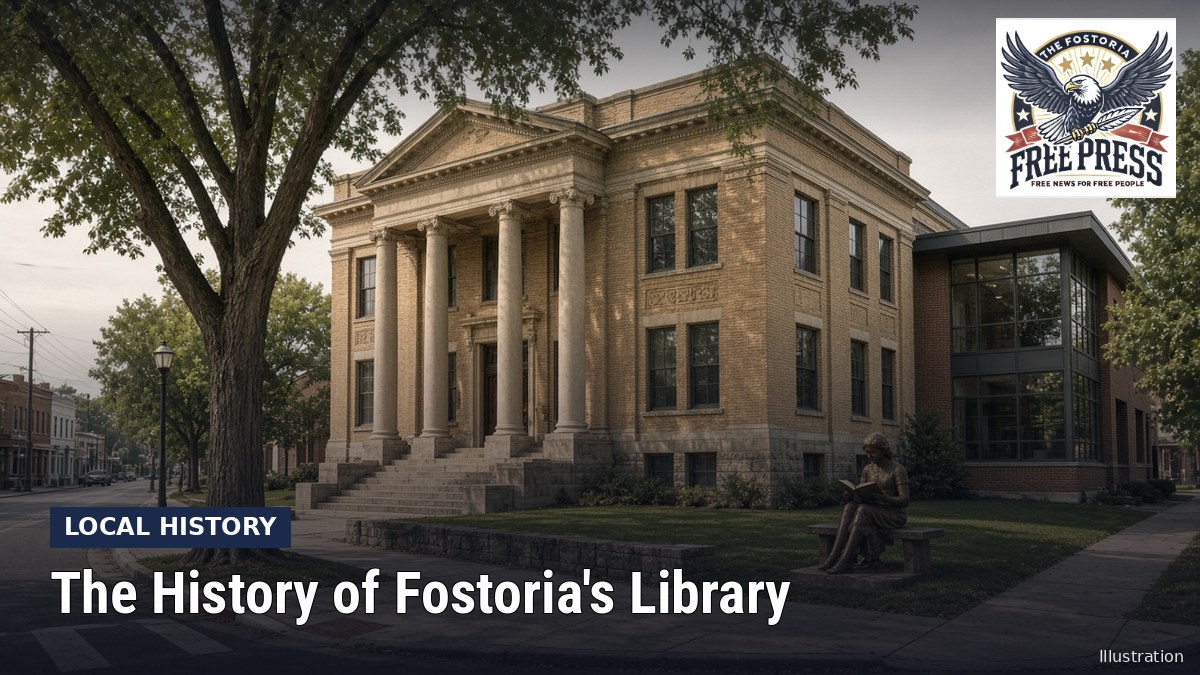
Illustration: The Fostoria Free Press.
FOSTORIA- For well over a century, Fostorians have gone to Perry Street for books. Kaubisch Memorial Public Library grew from a small alumni reading room into the region’s center for information and literacy. Here is how it happened.
1892: An alumni library
According to the library’s own history timeline, the story begins in 1892, when the Fostoria High School Alumni Library opened to the public. It was not free: members paid a fee of $1.00 per year.
1900: Free to all
In 1900, the library says, a grant from the city of Fostoria made the library free to all citizens. That change turned a members’ collection into a true public library.
1913: A building of its own
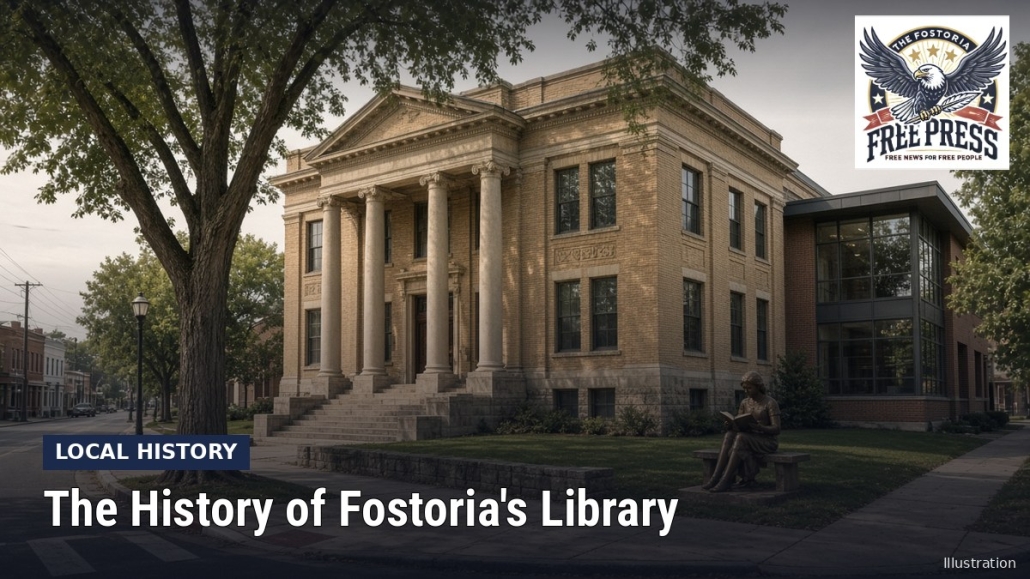
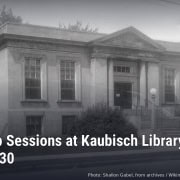
The next milestone came in 1913. The library credits two donors: money donated by Mrs. Louisa McClean and a grant from Andrew Carnegie “made it possible for the library to be built on its present site.” Carnegie, the steel magnate, funded library buildings in many American towns in that era, and Fostoria’s library has stood on the same site since.
1968: The Kaubisch addition
In 1968, the library says, “the generosity of Fostorian Arthur Kaubisch made a large addition possible.” His name is the one the library carries today: Kaubisch Memorial Public Library.
1989: Growing again
In 1989, a significant gift from Don and Judy Miller, together with a five-year tax levy passed by Fostoria voters, paid for another addition, according to the library’s timeline.
A home for local history
Fittingly, the library has become a keeper of Fostoria’s own history. Its local history collection includes area newspapers on microfilm dating back to 1832, a pre-1970 clipping file of historical and biographical Fostoria material, a local newspaper index starting in 1974, city and county directories, some as far back as 1869, historical atlases and plat maps, and nearly complete sets of Fostoria and St. Wendelin high school yearbooks. It also has information on Fostoria Glass and the other twelve glass factories that operated in the city between 1887 and 1920.
The library’s genealogy department notes that Fostoria “presents a unique challenge to genealogists because it is located in three counties.” With support from the Fostoria Lineage Research Society and local genealogists, the library has built a large collection on the tri-county area, including census microfilm, cemetery records and an obituary card file.
Art on the grounds
Two sculptures add to the library’s story. The bronze “Storytime”, showing a life-size girl seated on a bench reading to her cat, was donated by the Spellerberg family in honor of David and Jeanne Spellerberg. The steel “Promise to Flower”, by Ric Leichliter, sits at the corner of Perry and Fremont streets as a memorial to Mark Mullins.
Governed by the community
The library is governed by a Board of Trustees appointed by the mayor of Fostoria with the approval of City Council. Its mission is to serve “all Fostorians and residents in the surrounding three counties.” The nonprofit Friends of the Library supports it with memberships and donations.
Stop in at 205 Perry St. to see the building and its history for yourself. Check the library’s website for current hours and services.
Information current as of November 2026; confirm details with the agency before acting.
Sources
Kaubisch Memorial Public Library: History; Local History; Genealogy and Obituaries; Mission Statement; Board of Trustees; Friends of the Library; Storytime and Promise to Flower sculptures (fostoria.lib.oh.us)







Leave a Reply
Want to join the discussion?Feel free to contribute!