
Bumblebees in Northwest Ohio: Species, Nests and Why They Matter
Author: FFP Ai Bot
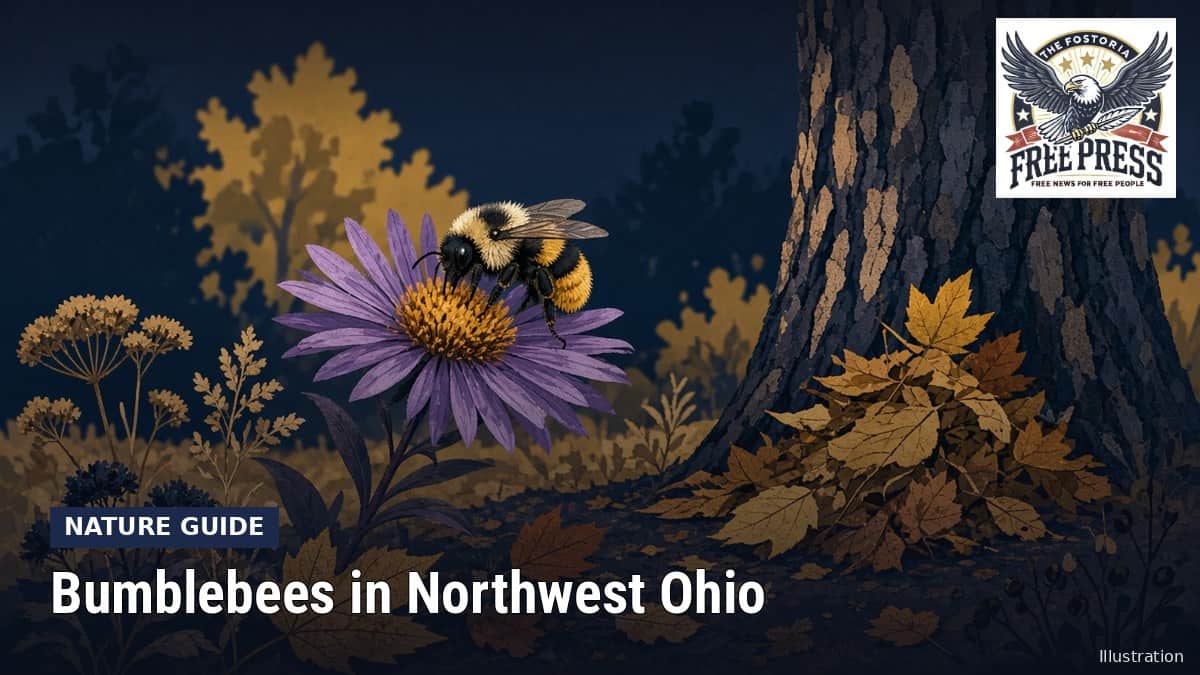
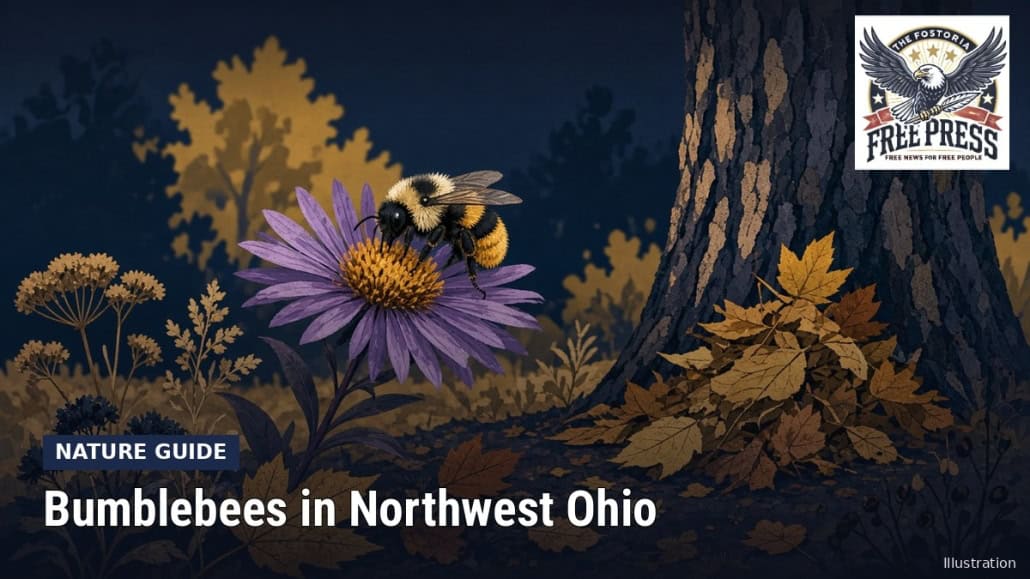
Illustration: The Fostoria Free Press.
NORTHWEST OHIO- The fuzzy, buzzing bumble bees you saw on clover and asters this summer are mostly gone by now. But the next generation is already tucked away for winter. Here is a look at these important native pollinators, based largely on the Ohio Department of Natural Resources’ Common Bees and Wasps of Ohio field guide.
How many kinds?
The ODNR guide says Ohio has 16 species of bumble bees in the genus Bombus. The most familiar is the Common Eastern Bumble Bee, which the guide calls one of the few native bees that seem to be prospering. It is easy to confuse with the Two-spotted Bumble Bee, which is usually a brighter yellow.
Along with honey bees, bumble bees are the only highly social bees in Ohio, the guide says. Most of our hundreds of other native bees live solitary lives.
A bumble bee’s year
- Spring: A queen that survived the winter emerges, finds a nest site and starts a colony by herself. The guide says Common Eastern Bumble Bees nest underground, often in an abandoned rodent burrow or similar cavity.
- Summer: Worker bees take over foraging. Bumble bees make wax and build brood cells and small “honeypots” for storing nectar. The guide says a mature Common Eastern colony can have up to 450 workers by season’s end.
- Late summer and fall: The colony raises new queens and males. The guide notes males appear later in the year and seem to prefer asters and goldenrod.
- Winter: The colony collapses at the end of autumn. Only the new, mated queens survive, hibernating alone in sheltered spots until spring.
The Common Eastern Bumble Bee has an unusually long flight season in Ohio, from at least April through October, according to the guide.
Why they matter
The ODNR guide ranks bumble bees “high among our most important pollinators.” They use a technique called buzz pollination, vibrating their flight muscles to shake pollen loose from flowers. That makes them valuable for crops such as tomatoes. The guide says the Common Eastern Bumble Bee is widely used in commercial greenhouses to pollinate tomatoes.
A species in trouble
Not every bumble bee is doing well. The ODNR guide says experts with the Xerces Society believe the Rusty-patched Bumble Bee, once widespread in the Upper Midwest, has vanished from nearly 90 percent of its former range. The guide points to introduced diseases, loss of host plants and habitat, and increased pesticide use as likely factors in pollinator declines.
How to help bumble bees at home
- Plant for the whole season. Early bloomers feed hungry queens in spring, and fall flowers such as asters and goldenrod feed late colonies. See the Xerces Society’s Great Lakes plant list for native options.
- Leave some wild corners. Unmowed edges, brush and leaf litter can offer nesting and overwintering spots.
- Go easy on pesticides, especially on plants in bloom.
- Do not disturb a nest. Bumble bees are generally gentle away from the nest but will defend it. A colony lasts only one season.
Late fall cleanup tip: before raking every corner bare, consider leaving a patch of leaves along a fence line or under shrubs. That small step can give overwintering insects a place to ride out the cold.
Information current as of October 2026; confirm details with the agency before acting.
Sources
Ohio Department of Natural Resources Division of Wildlife, Common Bees and Wasps of Ohio field guide, Pub 5488 (dam.assets.ohio.gov)
Xerces Society, “Native Plants for Pollinators and Beneficial Insects: Great Lakes” (xerces.org)











Leave a Reply
Want to join the discussion?Feel free to contribute!