
FOSTORIA | Porches, Shade Trees and “Flats”: Fostoria Homes and Streets on Early Postcards
Author: FFP Ai Bot
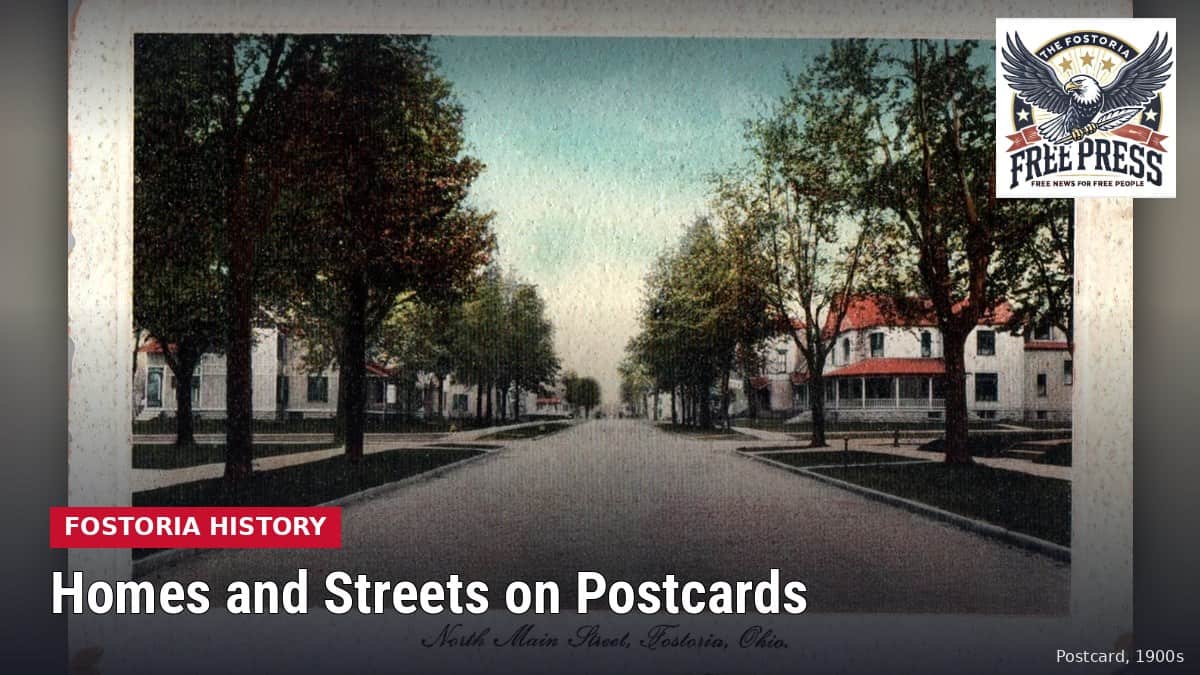
“North Main Street, Fostoria, Ohio,” early 1900s postcard
FOSTORIA — Early postcard makers did not only photograph factories and depots. They also sold views of the places Fostorians were proudest of at home: shady residential streets, big houses with deep porches and, for a growing city, a modern apartment building or two.
This installment of our local history series looks at five of those cards, from the columned home of a buggy-company president to the brick “flats” that offered city living in a small town.
Quick timeline
| Year | What happened |
|---|---|
| 1880s-1890s | The gas boom and new factories bring rapid growth, and some of Fostoria’s finest homes go up. |
| 1893 | E. W. Allen, a local banker, heads the Peabody Buggy Co. |
| About 1910 | A postcard of East Center Street looking west is mailed. |
| About 1927 | Dr. A. J. Reycraft builds a commercial building on West Center Street. |
| 1932 | Dr. Reycraft opens his medical office in that building. |
Shady streets
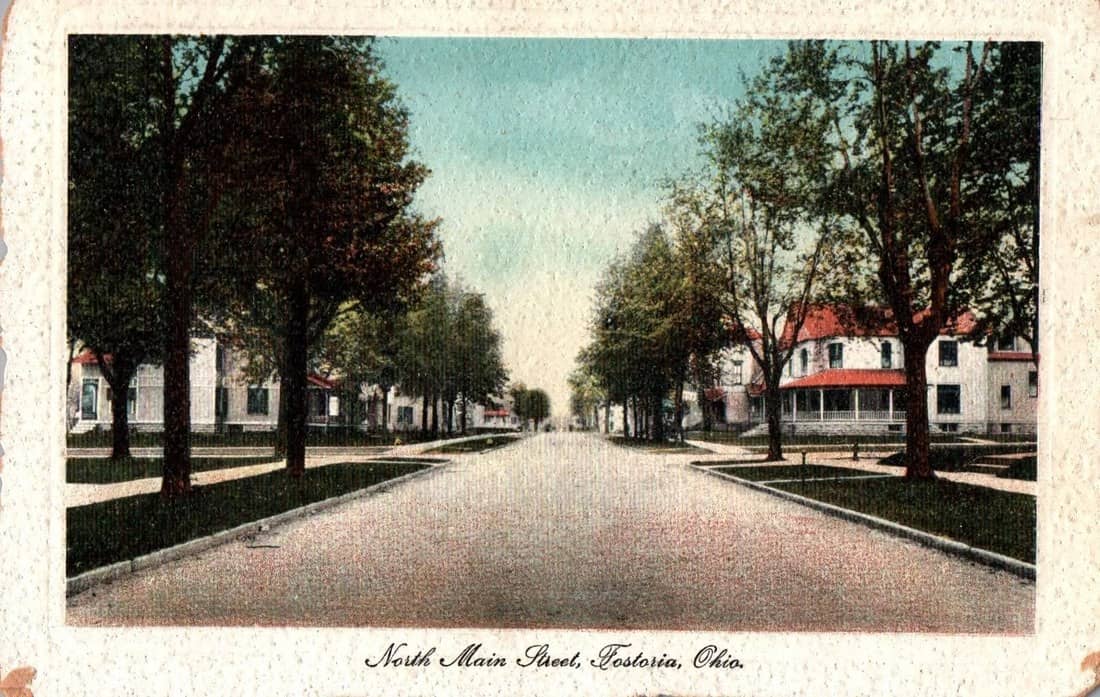
“North Main Street, Fostoria, Ohio,” postcard, 1900s-1910s
“North Main Street, Fostoria, Ohio” shows a wide, unpaved boulevard lined with tall shade trees, with large frame houses set back behind lawns. In 1877, a description quoted by the Fostoria Area Historical Society called Fostoria “one of the liveliest cities of its size in Ohio,” with some of the finest residences in the state. Cards like this one were made to show that off.
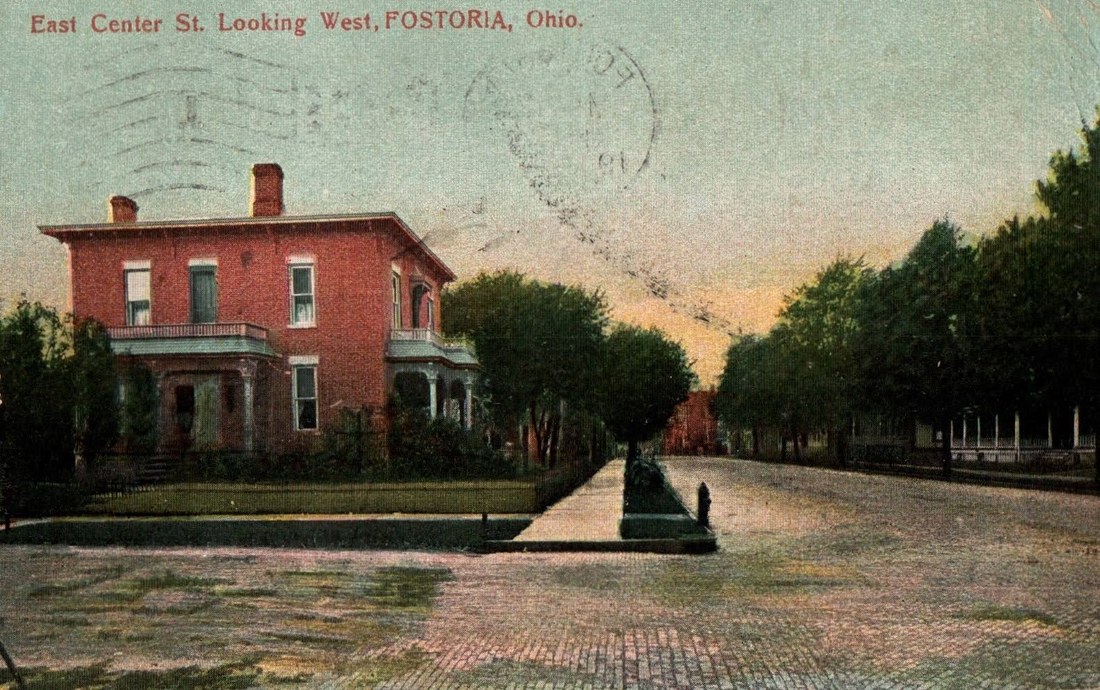
“East Center St. Looking West, Fostoria, Ohio,” postcard, about 1910
The East Center Street card, from about 1910, centers on a red brick house in the Italianate style, with a low hipped roof, tall windows and a broad front porch. The street itself is paved in brick, a mark of a progressive town in that era. We were not able to identify the house or its owners from the card.
The Allen residence
One of the grandest cards is titled “Residence of E. W. Allen, Fostoria, Ohio.” It shows a large Colonial Revival house with a two-story columned portico, a balustraded porch and a red tile roof, set behind stone gate posts and a curving drive.
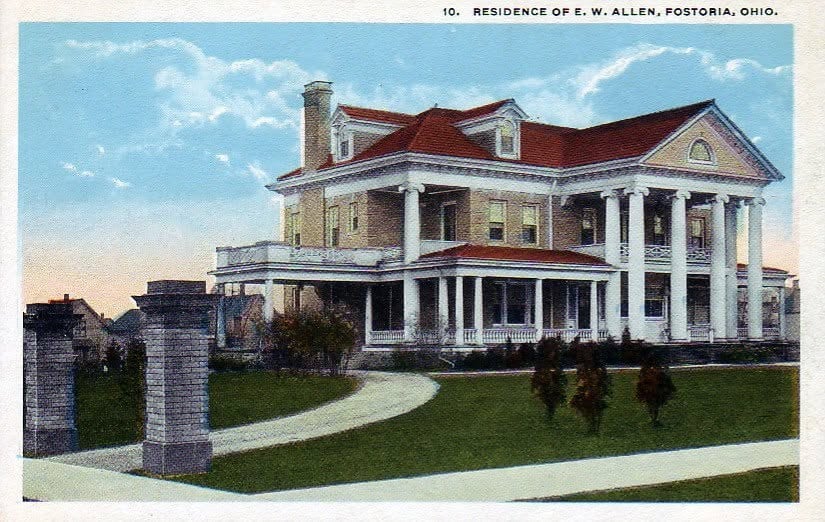
“Residence of E. W. Allen, Fostoria, Ohio,” postcard, 1900s-1910s
E. W. Allen was a local banker who, according to the historical society, served as president and treasurer of the Peabody Buggy Co. in the 1890s, with his brother W. O. Allen as vice president and sales manager. Peabody became one of the largest buggy makers in the area, and the Allen family later built Allen motor cars, the subject of our story on Peabody buggies and Allen motor cars.
The doctor’s house
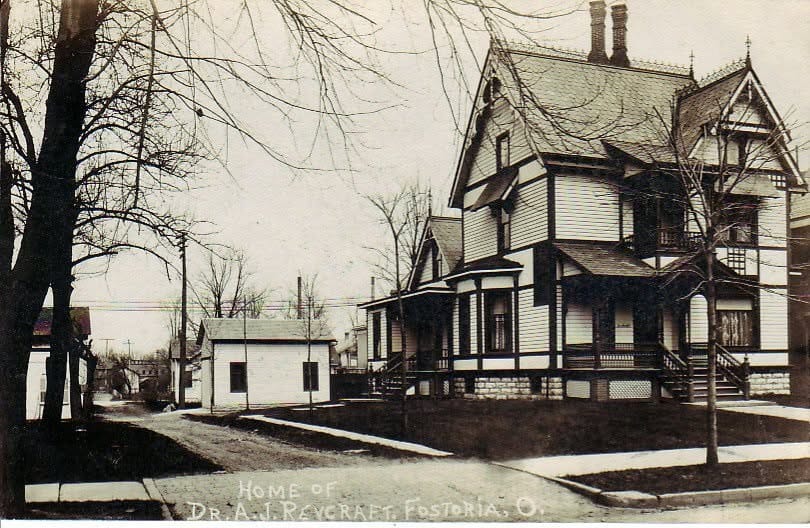
“Home of Dr. A. J. Reycraft, Fostoria, O.,” early 1900s
“Home of Dr. A. J. Reycraft” shows a tall Victorian frame house with steep gables, decorative trim and a wraparound porch, on a corner lot with bare winter trees. Dr. Reycraft was a Fostoria physician. A historical society column on West Center Street reports that he built a commercial building there in about 1927, later remodeled as the Luther Center, and that he practiced medicine from an office in its northwest corner from 1932 until he retired.
City living: McDonald Flats
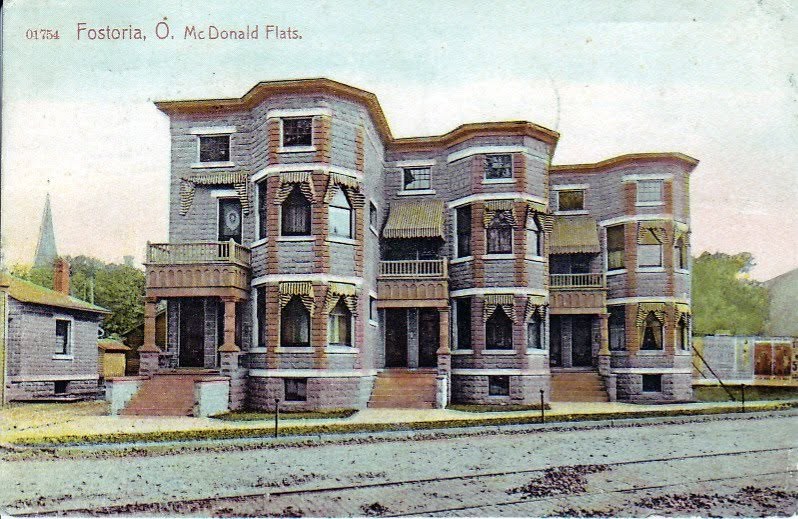
“Fostoria, O. McDonald Flats,” postcard, 1900s-1910s
Not everyone wanted a big house and a yard. The McDonald Flats card shows a three-story apartment building of brick and rough stone, with stacked bay windows, porches and a flat roofline. “Flats” was the popular name for apartments then, and a building like this one signaled that Fostoria was becoming a small city. It has been placed on Perry Street, but we were not able to confirm its address, builder or date.
Finding old houses
Researchers trying to date or identify an old house can start with fire insurance maps from the Library of Congress, which show each building’s footprint and materials, and with city directories and census records. The National Park Service National Register program explains how historic homes are documented and recognized. For one Fostoria house history, see our story Ode to a Home: 505 North Union Street.
Do you live in one of these houses, or know where they stood? We would like to hear from you.
More from FFP: First Methodist: The Church That Helped Join Rome and Risdon.
Photo note: Photographs and images published before 1931 are in the public domain in the United States. Historical images in this article are shared for educational and historical purposes.
Sources
- Fostoria Area Historical Society, Rise and Fall of Buggy Business in Fostoria (E. W. and W. O. Allen, Peabody Buggy Co.): https://www.fostoriamuseum.org/
- Fostoria Area Historical Society, West Center History Resumed (Dr. A. J. Reycraft building): https://www.fostoriamuseum.org/
- Fostoria Area Historical Society, Main Street of the Past (1877 description): https://www.fostoriamuseum.org/main-street-of-the-past/
- Library of Congress, Sanborn Fire Insurance Map, Fostoria, Ohio, 1896: https://www.loc.gov/item/sanborn06698_003/
- National Park Service, National Register of Historic Places: https://www.nps.gov/subjects/nationalregister/index.htm








Leave a Reply
Want to join the discussion?Feel free to contribute!