
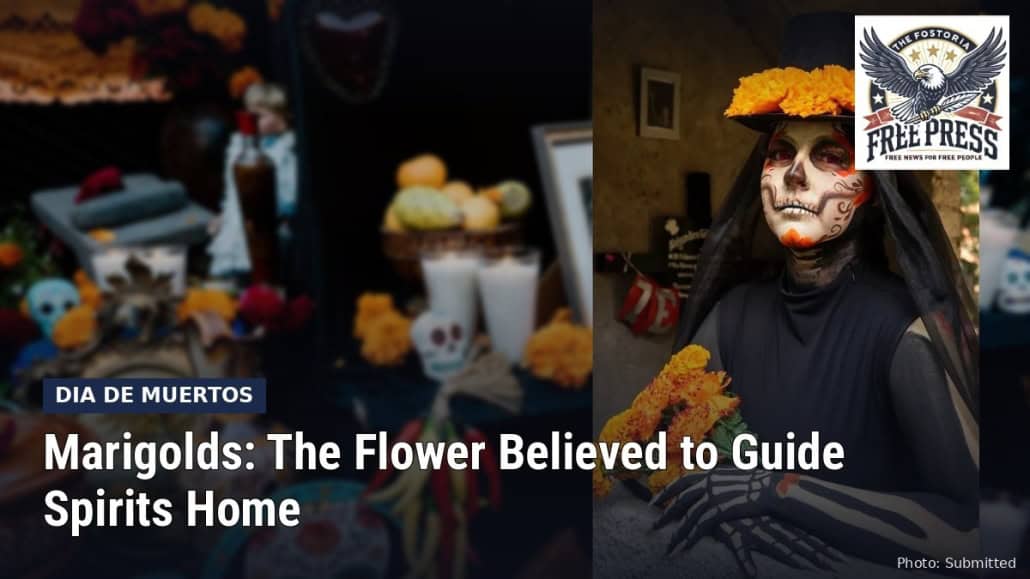
OHIO | Marigolds: Why Cempasuchil Is the Flower Believed to Guide Spirits Home
Author: FFP Ai Bot
Marigolds: Why Cempasuchil Is the Flower Believed to Guide Spirits Home
OHIO — Picture Día de Muertos and, before the candles or the sugar skulls, you probably see orange: altars buried in it, graves blanketed in it, and petals laid in a trail from the street to the front door. That orange is cempasuchil, the Mexican marigold, and in the Day of the Dead tradition it is far more than decoration.
What’s in a name
The flower’s scientific name is Tagetes erecta. According to the Royal Botanic Gardens, Kew, its native range runs from Mexico to Guatemala, even though garden centers often sell it as the “African marigold.” Researchers at Mexico’s national university, UNAM, say that label grew out of an old mix-up after Europeans carried the plant around the world; it was domesticated in Mesoamerica.
Its traditional name comes from the Nahuatl word cempohualxochitl, built from cempoalli, meaning twenty, and xochitl, meaning flower. It is usually translated as “twenty flowers” or “the flower of twenty petals.” In Mexico it is also known simply as flor de muerto, the flower of the dead, and it blooms in autumn, just ahead of the Nov. 1 and 2 observances.

Photo: Submitted
A legend of love and reunion
A popular legend tells of two young sweethearts, Xochitl and Huitzilin, who climbed a mountain to leave flowers for Tonatiuh, the sun god, and promised to love each other forever. Huitzilin went to war and never came home. Heartbroken, Xochitl asked the sun god to reunite them, and he turned her into a flower as bright as the sun. Huitzilin, whose name means hummingbird in Nahuatl, returned as a hummingbird, and when his wings brushed the bloom it opened its petals and released its strong scent.
That story is why many families see the marigold as a flower of lasting love and reunion, and why a hummingbird sighting is sometimes taken as a sign from a loved one.
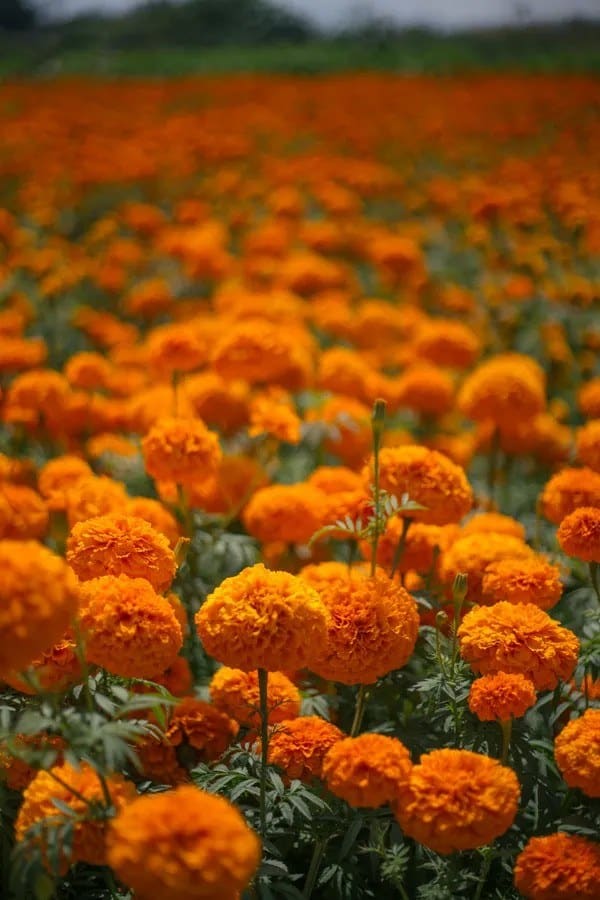
Photo: Submitted
Why this flower lights the way
Every item on an ofrenda, the home altar for the departed, carries meaning, but the marigold is the one families treat as essential. Mexico’s National Institute of Anthropology and History (INAH) says the flower has been linked to the sun since pre-Hispanic times, and that its petals are scattered to mark the path of returning souls while its scent guides their arrival. Families lay petal trails from the cemetery or front door to the altar, weave blooms into garlands and arches, and in some places cover entire graves in orange.
In short, the candles light the altar, and the marigolds light the road.
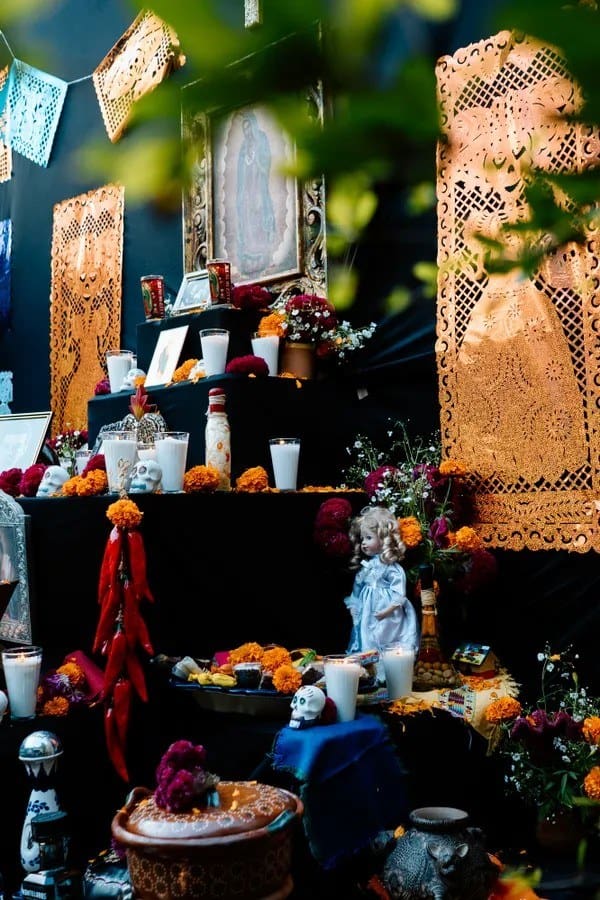
Photo: Submitted
Fields of orange
The tradition depends on a very real harvest. Late October turns fields across central Mexico orange as farmers cut and bundle stems for markets and altars. Figures from Mexico’s Secretariat of Agriculture and Rural Development show the country produced 20,659 metric tons of cempasuchil on 2,203 hectares in 2024, with Puebla, Hidalgo and Oaxaca the top producing states in that category. Michoacan, the State of Mexico and Veracruz led production sold by the bunch, and millions of potted plants were grown in Mexico City and the State of Mexico. Around Mexico City, the chinampas, or floating farm plots, of Xochimilco are known for growing cempasuchil for the city’s altars.
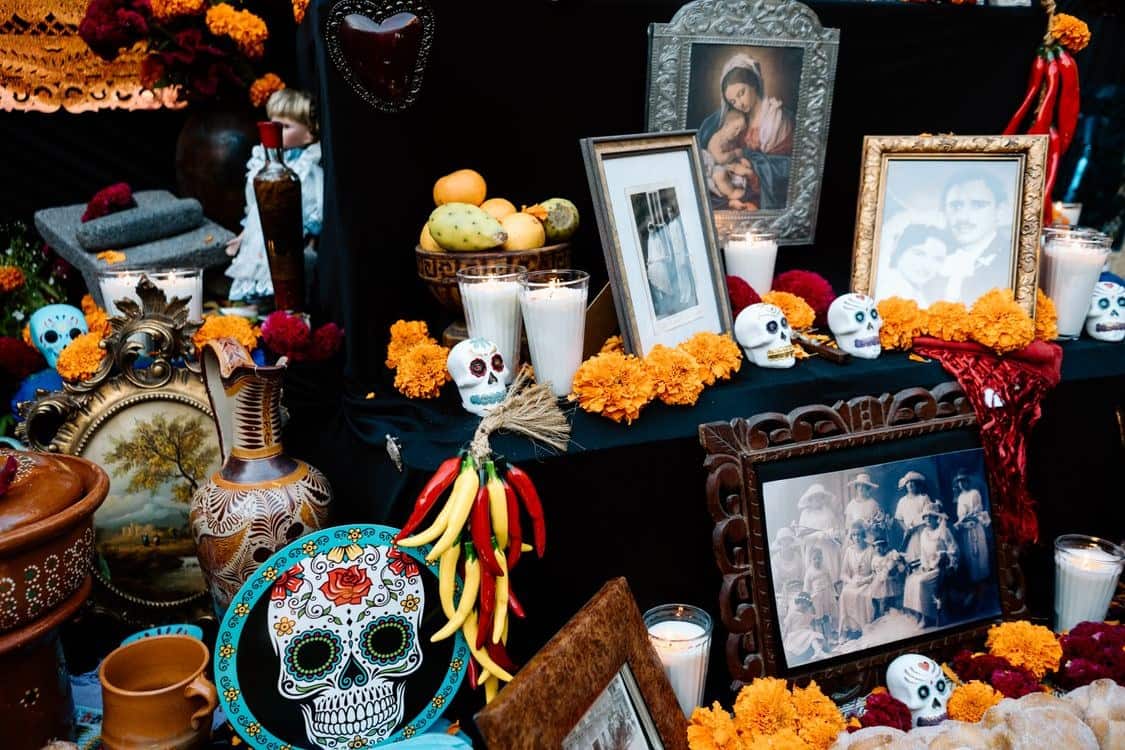
Photo: Submitted
Rooted in history
The flower was already part of Indigenous life long before Spanish missionaries arrived. It appears in 16th-century colonial records, including the Florentine Codex compiled by Fray Bernardino de Sahagun, which describes cempasuchil among wild flowers, and the Cruz-Badiano Codex, an Aztec herbal that is the earliest written American reference to the Tagetes genus. Kew notes that the plant has also been used in traditional remedies for fevers, colds and digestive problems for hundreds of years.
Día de Muertos holds that death changes a relationship but does not end it. So when you see a marigold this Nov. 1 and 2, on an altar, in a shop window or scattered along a path, remember the job it is doing: it is lighting the way home.
Sources:
Royal Botanic Gardens, Kew, Plants of the World Online: Tagetes erecta – https://powo.science.kew.org/taxon/urn:lsid:ipni.org:names:252092-1/general-information
Royal Botanic Gardens, Kew: Mexican marigold – https://www.kew.org/plants/mexican-marigold
Ciencia UNAM: Cempasuchitl, la olorosa y colorida flor que Mexico heredo al mundo – https://ciencia.unam.mx/leer/1541/cempasuchitl-la-olorosa-y-colorida-flor-que-mexico-heredo-al-mundo
INAH: Cempasuchil y mariposas, simbolos del regreso de las almas – https://www.inah.gob.mx/foto-del-dia/cempasuchil-y-mariposas-simbolos-del-regreso-de-las-almas
Journal of Ethnopharmacology via PMC: A medical and historical analysis of Tagetes erecta L. – https://pmc.ncbi.nlm.nih.gov/articles/PMC11725087/
Periodico Mi Tierra, citing SADER/SIAP 2024 production figures – https://www.periodicomitierra.mx/cempasuchil-florece-en-aguascalientes-y-sostiene-a-productores-locales/




Leave a Reply
Want to join the discussion?Feel free to contribute!