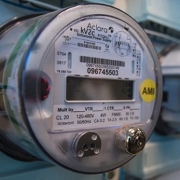
Smart Meters and Mesh Networks: What They Can (and Can’t) Do

Smart meters have become a standard part of modern electrical infrastructure in many parts of the United States. These digital devices, often connected through mesh radio networks as part of Advanced Metering Infrastructure (AMI), replaced traditional analog meters that only tracked monthly totals. While they offer benefits for utilities and sometimes customers, they’ve also raised questions about privacy, surveillance, and electromagnetic fields (EMF).
Can Utilities Tell How Many Breakers Are in Your Panel?
One common concern is whether smart meters give utilities detailed insight into a home’s internal wiring — specifically, the number of circuit breakers in the electrical panel.
The short answer is no. Standard smart meters are installed at the service entrance (usually on the exterior wall of your house) and only measure the total electricity flowing into the entire home. They do not have sensors inside your breaker box and cannot directly count individual circuits.
Even advanced analysis techniques like Non-Intrusive Load Monitoring (NILM), which tries to identify appliance usage from overall load patterns, focuses on major devices (refrigerators, air conditioners, etc.), not the raw number of breakers. Factors like harmonics, electrical noise, or frequency variations primarily reflect what’s plugged in and running, not how many switches exist downstream.
Utilities might make very rough inferences about home size or complexity from peak usage patterns, but they cannot accurately determine your exact breaker count through the meter alone.
What Data Do Smart Meters Actually Collect?
Mesh network smart meters collect significantly more information than old analog meters. Typical data includes:
- Consumption data: Kilowatt-hour (kWh) usage, often recorded in 15-, 30-, or 60-minute intervals. This creates a detailed daily load profile.
- Power quality metrics: Voltage levels, fluctuations, power factor, and sometimes harmonics.
- Service events: Power outages, restorations, and tamper alerts.
- Diagnostic information: Basic system health and, in some cases, net metering data for homes with solar.
This information helps utilities improve billing accuracy, detect outages faster, manage grid load, and plan infrastructure upgrades. High-resolution usage data can sometimes reveal broad behavioral patterns (e.g., when people are typically home), but it stops well short of appliance-level or room-by-room spying without additional customer-installed devices.
Two-Way Communication: Transmit and Receive
Unlike old meters that only accumulated readings, modern smart meters are two-way devices:
- They transmit usage and diagnostic data to the utility, usually in short bursts several times per day via a mesh radio network. Your meter often relays data from neighboring homes as well.
- They can receive commands from the utility, such as firmware updates, time synchronization, remote connect/disconnect (on capable models), or demand-response signals for time-of-use pricing.
The mesh network uses low-power radio frequencies (often around 900 MHz) with intermittent transmissions, keeping overall radio activity relatively low.
EMF Concerns: How Do Smart Meters Compare to Power Lines?
Many homeowners worry about electromagnetic fields from the meter itself. Here’s the reality:
- Low-frequency (60 Hz) fields — These are primarily created by the current flowing through the thick incoming service cables (power lines). The smart meter itself adds very little because it’s simply in line with those cables. Magnetic field strength depends mostly on how much electricity you’re using.
- Radiofrequency (RF) fields — This is the main new addition from the wireless transmitter. Emissions are intermittent and low-power, typically far below regulatory safety limits and often lower than everyday sources like cell phones or Wi-Fi routers.
Overall, the incoming power lines usually dominate the EMF profile near the meter. The device does not create a dramatically stronger field than the service entrance cables it connects to. Maintaining a few feet of distance further reduces exposure.
Bottom Line
Smart meters provide utilities with much better visibility into whole-house electricity use than analog meters ever did, enabling smarter grid management. However, they do not offer X-ray vision into your breaker panel, individual circuits, or personal habits beyond broad consumption patterns.
If you’re concerned about privacy, check your utility’s data policy — many allow opt-outs (sometimes with fees) or provide basic usage portals. For detailed circuit-level monitoring in your own home, consider installing a dedicated energy monitor (like Emporia Vue or Sense) at your electrical panel.
Smart meters are a trade-off: greater convenience and grid efficiency versus modestly increased data collection. Understanding their actual capabilities helps separate real concerns from common misconceptions.